Tag Archives: Compassion

From the Advent Archives: Where is the Justice?

Read Romans 12:15-21

ALSO IN SCRIPTURE
“Indeed, the LORD will give justice to his people…” (Deuteronomy 32:36a, NLT)

Image: AI-generated using DALL·E and customized by the author. Used with the devotional “From the Advent Archives: Where Is the Justice?” at Life-Giving Water Devotions.

There come times in one’s life when it is realized that an act was far less timely in the moment it was committed to memory, and this is such a time. Eleven years ago, I saw the America I knew disintegrating—falling apart before my very eyes. Truthfully, we all did. Barack Obama was still president, a very consequential president, if not for anything else other than his race. Of course, he was consequential in many other ways too, but it was his race that would prove the most eye-opening for this country.

I grew up believing we lived in an America that was largely past racism. To be honest, I also grew up in an insular, small-town white bubble. What racism was I really exposed to? Plenty. But it was hidden in jokes, in what nuts were called, and in other subtleties that sound like normalities to people not on the receiving end of them. It ALWAYS bothered me, especially when I gave in and laughed or participated to “fit in.” Thankfully, I never got into the habit of it because I always disliked it. It made me uncomfortable. Why? Because I am an outcast too, and once you’ve been outcast for ANY reason, how can you then outcast others? It happens. But not on my watch.

What you are about to read is a devotion I published on December 5, 2014, in the wake of the acquittal decision in the Ferguson, MO / Michael Brown Jr. case. Now, more than ever, we can see that where we are today is not new, but something that had been brewing under the surface—where we like to keep things hidden.


In 1999, Mel Gibson starred in Payback, a 1950s-style crime thriller directed by Brian Helgeland. I say “1950s-style” because it had Mel Gibson narrating his own story in the kind of way you’d expect to see on the classic police show Dragnet. The twist is that Gibson’s character, Porter, is not a police officer, but a petty criminal who ends up being double-crossed by his former partner-in-crime and his estranged wife.

Porter had cheated on his wife who, to get back at him, joined forces with his partner to plot against him. They shoot him (with the intent of killing him) and steal $70,000 from him—money that he, no doubt, stole from someone else.

To make a long story short—and to do so without spoiling the gritty experience that the film is—Porter sets out to pay back (hence the film’s name) those who did him wrong. He wages a bloody and intense war on his former partner, his estranged wife, and eventually on the crime syndicate protecting them. By the end of the film you can’t help but wonder what justice, if any, was done. Still, it satisfies that inner need to see the “bad guy” get his in the end. Of course, Porter is a “bad guy” getting even with other “bad guys.” This is played up in the film’s slogan: Prepare to root for the bad guy.

There are times in our life when we feel we have been wronged by our family, our friends, our neighbors, and others. In those moments, we often cannot help but feel anger and the desire to get back at such people. Even when we aren’t seeking to get back at them ourselves, we wish that something would happen to them to “teach them a lesson.” We use terms like “karma” to express our wish for fate to slap them right where it counts—and, if possible, allow us to be there to witness it. I know that even while driving down the road, I have prayed that the person who cut me off would pass a police officer and get pulled over. I am sure I am not the only one who has prayed such a prayer.

We live in a world that sees REVENGE as justice. When things don’t go our way, when life seems unjust and no one seems to care that it is, we feel justified in taking things into our own hands and exacting our own brand of justice. In Ferguson, MO, for example, many protesters turned into rioters when they discovered that no charges were going to be brought against Officer Darren Wilson. As a result, a grieving family had to witness their son’s name being frivolously used to incite riots. Store owners and community members stood helplessly as they watched their neighborhoods burn. Innocent and peaceful protesters had to endure tear gas and fear for their lives, and police officers put their lives on the line to try and keep the situation under control.

Where’s the justice in all of that?

The fact is that our own brand of “justice” is often not justice at all. Revenge is not JUSTICE. Revenge is wrong, and it solves nothing. All it does is create more victims.

Image: AI-generated using DALL·E and customized by the author. Used with the devotional “From the Advent Archives: Where Is the Justice?” at Life-Giving Water Devotions.

When I think of God’s justice, I think of a 2014 picture of an officer who, in the midst of protests in Portland, Oregon over the Michael Brown case, hugged a twelve-year-old boy who was crying because he saw the world around him falling apart. He was feeling the weight of the grand jury’s decision to acquit the officer involved in the shooting and was concerned about police brutality toward young Black kids such as himself. In response to seeing the boy crying, the officer asked him what was wrong and, when the boy told him, he asked if he could have one of the “FREE HUGS” the boy’s protest sign was advertising.

JUSTICE is LOVE. JUSTICE is MERCY. Justice is KINDNESS.

While the world around us is often UNJUST, God is calling us to LIVE JUSTLY, to LOVE MERCY, and to WALK HUMBLY with God. That doesn’t mean we sit back and let the innocent get trampled; rather, it means we peacefully and lovingly stand in solidarity with the oppressed without falling victim to the urge to GET BACK at the oppressor. LIVE JUSTLY and inspire others—through actions of peace and love—to join you in doing the same.

THOUGHT OF THE DAY
“Social justice cannot be attained by violence. Violence kills what it intends to create.” – Pope John Paul II

PRAYER
Lord, help me to spread JUSTICE through peaceful actions of LOVE, MERCY, and COMPASSION. Amen.


© 2012 Rev. Todd R. Lattig. All rights reserved.
First published December 3, 2014.

KEEP CHRIST IN CHRISTIAN, Part 19: Don’t Withhold Grace

Read Matthew 5:43–48

ALSO IN SCRIPTURE
“O people, the LORD has told you what is good, and this is what God requires of you: to do what is right, to love mercy, and to walk humbly with your God.” (Micah 6:8 NLT)

We’ve all seen those bumper stickers and church signs urging us to “Keep Christ in Christmas.” Well-intentioned? Sure. But often missing the mark? Absolutely. They focus on preserving a commercialized image of “baby Jesus” rather than embracing the full, transformative power of Christ in our lives. The real challenge isn’t just keeping Christ in a holiday—it’s keeping Christ in Christian.

Image: AI-generated by Rev. Todd R. Lattig using Adobe Firefly and modified by the author.

Part 19: Don’t Withhold Grace. In the wake of President Donald J. Trump’s inauguration, the National Cathedral held its traditional interfaith prayer service—an event deeply rooted in American religious custom. Episcopal Bishop Mariann Edgar Budde offered a reflection that day, standing before a sanctuary full of dignitaries, including the newly inaugurated president. She didn’t grandstand. She didn’t ridicule. She simply made a pastoral appeal: “In the name of our God, I ask you to have mercy on the people in our country who are scared now.” She spoke of LGBTQ+ people, of immigrants, of refugees fleeing war—real people with real fears. It was a call for compassion, not condemnation. (PBS NewsHour)

But grace was not what she received.

President Trump dismissed the service on Truth Social as “boring,” labeled Bishop Budde a “so-called bishop,” and called her a “Radical Left hard-line Trump hater.” He also demanded an apology—reportedly because he believed she had embarrassed the nation. Evangelical leaders chimed in, with Pastor Robert Jeffress claiming Budde “insulted rather than encouraged our great president,” and a Republican Congressman suggesting she should be “added to the deportation list.” Yes—deportation—for praying for mercy.

Let that sink in.

This is a moment the Church must not ignore. Because the issue is not partisanship—it’s discipleship. It’s about whether Christians, especially, but not limited to, those with platforms and influence, will reflect the grace of Christ—or withhold it when it’s politically inconvenient.

Let’s contrast that moment with Rev. Franklin Graham’s prayer at the inauguration—one filled with calls for God’s protection and guidance for President Trump. That prayer had its place, and no one faulted him for offering it. But where was the accompanying call for justice, mercy, or humility? Where was Micah 6:8?

The real contrast isn’t one preacher versus another. It’s about how the Church chooses to show up. Do we offer grace only when it aligns with our worldview? Do we support leaders with unconditional affirmation, but condemn pastors who dare speak truth to power?

To make matters worse, we’re now in an era where empathy itself is mocked. Elon Musk has described empathy as a kind of civilizational weakness—suggesting that misplaced compassion can lead to societal decline and even “civilizational suicide.” He’s argued that we often direct empathy toward the wrong people or causes, and in doing so, we undermine collective strength. Disturbingly, this framing has begun to echo within some Christian circles, where empathy is being viewed as counterproductive or even dangerous.

Joe Rigney, Fellow of Theology at New Saint Andrews College and Associate Pastor at Christ Church, explores this very idea in his book The Sin of Empathy: Compassion and Its Counterfeits. In it, Rigney argues that unchecked empathy can distort Christian truth, framing it as a temptation rather than a virtue. When did Christlikeness become a weakness? When did mercy become controversial?

Jesus wept with the grieving. He touched the untouchable. He forgave his executioners. The Church cannot claim to follow Christ and simultaneously call for deportation when a bishop prays for compassion. We cannot cheer prayers for power while booing prayers for mercy.

Grace is not optional. It’s not something we ration out based on who we think deserves it. The moment we start doing that, we’ve stopped following Jesus and started following something else entirely.

That truth has been the driving thread through every part of this series. Keeping Christ in Christian is not about slogans or seasonal posturing. It’s about re-centering our lives—our communities—on the radical, often uncomfortable grace of Christ. And if we really mean to keep Christ in Christian, then we must allow that grace to shape not just our beliefs, but our actions, our speech, our silence, and how we treat those who challenge us.

THOUGHT OF THE DAY
Grace isn’t deserved—no one deserves or earns grace—rather, it is God’s free gift and can only be received or rejected. The choice is ours to make, and it will forever change the trajectory of our lives.

PRAYER
Gracious God, we confess that too often we withhold the very grace You poured out so freely. Help us not only to receive it but to reflect it—to extend mercy where there is pain, love where there is hatred, and truth where there is silence. Let us never trade our witness for comfort or our calling for allegiance to anyone but Christ. In Jesus’ name we pray. Amen.


Devotion written by Rev. Todd R. Lattig with the assistance of Perplexity AI.

KEEP CHRIST IN CHRISTIAN, part 10: Don’t Prioritize Dogma Over Relationships

Read Matthew 23:23-24

ALSO IN SCRIPTURE
“So now I am giving you a new commandment: Love each other. Just as I have loved you, you should love each other.” (John 13:34 NLT)

We’ve all seen the bumper magnets and bulletin signs urging us to “Keep Christ in Christmas.” While well-intentioned, this phrase often misses the mark. It focuses on preserving a commercialized image of “baby Jesus” rather than embracing the full, transformative power of Christ in our lives. The real challenge we face isn’t just keeping Christ in a holiday—it’s keeping Christ in Christian.

Image: AI-generated by Rev. Todd R. Lattig using Adobe Firefly and modified by the author.

Part 10: Don’t Prioritize Dogma Over Relationships: In the 2003 film “Luther,” there’s a powerful scene where Martin Luther (played by Joseph Fiennes) confronts the harsh dogma of his time. A young boy has committed suicide and is found hanging from scaffolding erected for repairs on the town’s church. The boy’s body is discovered suspended from one of the horizontal beams, creating a stark and haunting image that underscores the tragedy of the situation.

According to church doctrine, suicides were considered damned and couldn’t be buried in consecrated ground. In a defiant act of compassion, Luther insists on burying the boy in the Christian cemetery, declaring it was the devil’s work that killed the boy, not God’s judgment.

While this specific incident is a dramatic interpretation rather than historical fact, it powerfully illustrates the conflict between rigid dogma and compassionate relationships. The scene captures the essence of Luther’s more nuanced views on suicide, even if it takes some artistic liberties.

Historically, Luther did express more compassionate views on suicide than the prevailing Catholic doctrine of his time. In his Table Talk, Luther is recorded as saying that those who commit suicide are “blinded by the devil” and shouldn’t be judged too harshly. He emphasized the personal struggle with the devil and God’s ultimate intentions for individuals, rather than blanket condemnation.

Luther didn’t campaign to change burial practices for suicides, but his teachings laid the groundwork for a more nuanced understanding of mental health and divine mercy. This historical context, combined with the film’s dramatization, provides a rich illustration of prioritizing relationships and compassion over strict adherence to dogma.

As Christians, we often face similar conflicts between our doctrinal beliefs and the messy realities of human relationships. We might be tempted to cling to rigid interpretations of scripture or church traditions at the expense of showing Christ’s love to those who are hurting or marginalized.

Jesus himself often prioritized relationships and compassion over strict adherence to religious law. He healed on the Sabbath, touched those considered unclean, and ate with sinners – all actions that scandalized the religious authorities of his time. These authorities even went so far as to judge Jesus as being a glutton and a drunkard because of his scandalous associations (Matthew 11:19). In Matthew 23:23-24, Jesus criticizes the Pharisees for their meticulous adherence to minor points of the law while neglecting “the more important aspects of the law—justice, mercy, and faith.”

This doesn’t mean that doctrine is unimportant. Our beliefs shape our actions and our understanding of God. However, when we allow our dogma to become a barrier to showing Christ’s love, we’ve missed the point entirely. As Jesus said, the greatest commandments are to love God and to love our neighbors as ourselves (Matthew 22:36-40).

In our churches and communities today, we often face situations where our doctrinal positions conflict with showing compassion and building relationships. This is particularly evident in how we respond to LGBTQIA+ individuals. As an ordained elder in the United Methodist Church and an ally, I’ve witnessed firsthand the devastating damage done by prioritizing dogma over love and inclusion. The recent positive changes in the UMC regarding LGBTQIA+ inclusion represent a step towards prioritizing relationships over outdated interpretations of doctrine.

Similarly, we see this tension in how we treat migrants, including those who are undocumented. Christ’s command to welcome the stranger often conflicts with political ideologies that have seeped into church doctrine. We must ask ourselves: are we more concerned with enforcing human-made borders or with showing Christ’s borderless love?

This extends to how we treat people of other nations and faiths. Do we allow our national or religious identity to create barriers, or do we follow Christ’s example of crossing cultural and religious boundaries to show love and compassion?

In these moments, we must ask ourselves: Are we prioritizing our dogma over our relationships? Are we more concerned with being right than with showing Christ’s love? The answer to these questions will determine whether we truly keep Christ in “Christian.”

Let us strive to follow Christ’s example of radical love and compassion. May we hold our beliefs with humility, always ready to extend grace and understanding to others. Like Luther, may we be willing to challenge harmful dogmas when they conflict with the core message of God’s love and mercy.

THOUGHT OF THE DAY
“Doctrine is nothing but the skin of truth set up and stuffed.” – Henry Ward Beecher

PRAYER
God, help us to hold our beliefs with humility and to always prioritize love and compassion in our relationships with others. May we never let our dogma become a barrier to showing Your love to those around us. Guide us in discerning when to stand firm in our convictions and when to extend grace and understanding. In Jesus’ name, we pray. Amen.

Devotion written by Rev. Todd R. Lattig with the assistance of Perplexity AI.

June 2, 2024 – Newton UMC – Sunday Worship Livestream

JOY Fellowship Worship Service in Holland Hall: 9:00 a.m.

Worship service streams live at 9:00 a.m. EST (-500 GMT)

Worship service streams live at 10:30 a.m. EST (-500 GMT)

Welcome to our live-streamed Sunday Worship Services for June 2, 2024. Today we discover that in the midst of our weaknesses and uncertainties, we carry the priceless treasure of Jesus Christ within us, empowering us to shine his light and serve his purpose as a united congregation, especially during times of transition.

Please support us by giving online: https://tithe.ly/give?c=1377216 or https://paypal.me/newtonumc Or you can make and mail a check out to First UMC of Newton, 111 Ryerson Ave., Newton, NJ O7860

God bless you all for your generosity which is vital to our mission and ministry.

May 26, 2024 – Newton UMC – Sunday Worship Livestream

JOY Fellowship Worship Service in Holland Hall: 9:00 a.m.

Worship service streams live at 9:00 a.m. EST (-500 GMT)

Worship service streams live at 10:30 a.m. EST (-500 GMT)

Welcome to our live-streamed Sunday Worship Services for May 26, 2024. Today we discover that today is the day we hear God’s call. Today is the day we recognize God has chosen us. Today is the day we are humbled by that calling. And today is the day that we are going to respond! Amen.

Please support us by giving online: https://tithe.ly/give?c=1377216 or https://paypal.me/newtonumc Or you can make and mail a check out to First UMC of Newton, 111 Ryerson Ave., Newton, NJ O7860

God bless you all for your generosity which is vital to our mission and ministry.

May 12, 2024 – Newton UMC – Sunday Worship Livestream

JOY Fellowship Worship Service in Holland Hall: 9:00 a.m.

Worship service streams live at 9:00 a.m. EST (-500 GMT)

Worship service streams live at 10:30 a.m. EST (-500 GMT)

Welcome to our live-streamed Sunday Worship Services for May 12, 2024. Today we discover that Through Jesus, God makes us a new creation – but not just us! God makes everything new and entrusts us to take action that it might be so.

Please support us by giving online: https://tithe.ly/give?c=1377216 or https://paypal.me/newtonumc Or you can make and mail a check out to First UMC of Newton, 111 Ryerson Ave., Newton, NJ O7860

God bless you all for your generosity which is vital to our mission and ministry.

May 5, 2024 – Newton UMC – Sunday Worship Livestream

JOY Fellowship Worship Service in Holland Hall: 9:00 a.m.

Worship service streams live at 9:00 a.m. EST (-500 GMT)

Worship service streams live at 10:30 a.m. EST (-500 GMT)

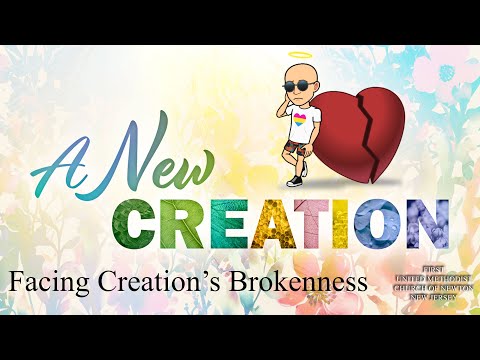
Welcome to our live-streamed Sunday Worship Services for May 5, 2024. Today we discover that humanity’s sin and brokenness has had devastating effects on the world for which we are called to care. As earth’s stewards, living into our resurrection hope involves reckoning with our failures and working for the freedom of all creation – human and nonhuman alike.

Please support us by giving online: https://tithe.ly/give?c=1377216 or https://paypal.me/newtonumc Or you can make and mail a check out to First UMC of Newton, 111 Ryerson Ave., Newton, NJ O7860

God bless you all for your generosity which is vital to our mission and ministry.

April 21, 2024 – Newton UMC – Sunday Worship Livestream

JOY Fellowship Worship Service in Holland Hall: 9:00 a.m.

Worship service streams live at 9:00 a.m. EST (-500 GMT)

Worship service streams live at 10:30 a.m. EST (-500 GMT)

Welcome to our live-streamed Sunday Worship Services for April 21, 2024. Today we discover that as human beings, we tend to think the world revolves around us! As scripture opens our eyes to the fullness of God’s creation, let us consider a shift in perspective. We are but one part of God’s magnificent creation. What does creation tell us if we listen?

Please support us by giving online: https://tithe.ly/give?c=1377216 or https://paypal.me/newtonumc Or you can make and mail a check out to First UMC of Newton, 111 Ryerson Ave., Newton, NJ O7860

God bless you all for your generosity which is vital to our mission and ministry.

April 14, 2024 – Newton UMC – Sunday Worship Livestream

JOY Fellowship Worship Service in Holland Hall: 9:00 a.m.

Worship service streams live at 9:00 a.m. EST (-500 GMT)

Worship service streams live at 10:30 a.m. EST (-500 GMT)

Welcome to our live-streamed Sunday Worship Services for April 14, 2024. Today we learn that in resurrecting, Jesus gives us hope for new life. This hope is life and joy for all creation!

Please support us by giving online: https://tithe.ly/give?c=1377216 or https://paypal.me/newtonumc Or you can make and mail a check out to First UMC of Newton, 111 Ryerson Ave., Newton, NJ O7860

God bless you all for your generosity which is vital to our mission and ministry.

April 7, 2024 – Newton UMC – Sunday Worship Livestream

JOY Fellowship Worship Service in Holland Hall: 9:00 a.m.

Worship service streams live at 9:00 a.m. EST (-500 GMT)

Worship service streams live at 10:30 a.m. EST (-500 GMT)

Welcome to our live-streamed Sunday Worship Services for April 7, 2024. Today we worship together and listen to the sermon, “Without a Doubt”, by Certified Lay Servant, Kathleen Meredith.

Please support us by giving online: https://tithe.ly/give?c=1377216 or https://paypal.me/newtonumc Or you can make and mail a check out to First UMC of Newton, 111 Ryerson Ave., Newton, NJ O7860

God bless you all for your generosity which is vital to our mission and ministry.