Tag Archives: Grace

GOD BEGINNINGS, part 2: The Yoke

Read Matthew 11:29-30

ALSO IN SCRIPTURE
“For freedom Christ has set us free. Stand firm, therefore, and do not submit again to a yoke of slavery.” (Galatians 5:1 NLT)

Image: AI-generated using DALL·E and customized by the author. Used with the devotional “God Beginnings, Part 2: The Yoke” at Life-Giving Water Devotions.

Some of the most honest moments in film aren’t the loud ones. They arrive quietly, almost accidentally, in the middle of something else entirely — and stay with us long after the plot has moved on. The Shawshank Redemption holds one of those. There’s a scene where a prisoner locks himself in a warden’s office just long enough to find a record of two women singing in Italian, and plays it over the loudspeaker for the entire yard to hear. None of the men listening understand the language. Most will never know the names of the voices reaching them. For a few minutes, guards and inmates alike simply stop — caught by something they can’t explain, in a place built to strip away exactly this kind of beauty. Red, reflecting on it afterward, says it felt like something small and free had gotten loose inside those walls, if only for a moment.

What’s striking is that presence didn’t require proximity. The women singing had no idea that prison yard existed. They weren’t there, would never be there, and yet everyone in that yard was, for a few minutes, less alone than they’d been an hour before. That’s worth sitting with, because it says something true about how burden-sharing actually works — it doesn’t always require someone physically beside you. Sometimes presence arrives through a voice you’ll never meet, carried across distance and time, and it’s enough to lighten what you’re carrying without removing an ounce of it.

That’s close to what Jesus means when he says, “Take my yoke upon you… my burden is light.” The word translated “light” or “easy” — chrēstos in the Greek — doesn’t mean effortless. It’s the same word used elsewhere for kindness and goodness, and even for things well-fitted to whoever wears them. A yoke described this way isn’t weightless. It’s shaped to the one carrying it. Jesus isn’t offering an escape from labor. He’s offering labor that fits, carried alongside a presence that doesn’t have to be visible to be real.

That phrase — “take my yoke” — wasn’t new when Jesus said it. Rabbis of his era regularly spoke of “the yoke of Torah,” language for submitting to a teacher’s way of living faithfully before God. Jesus enters a metaphor his hearers already knew and makes a specific claim inside it: not that yokes are the problem, but that a yoke wrongly imposed becomes something the original intention never meant. Practically, a yoke also joins two — often pairing an experienced animal with a younger one, so weight is never carried solo. Jesus isn’t removing the labor of discipleship. He’s ending its isolation.

Paul makes a strikingly similar move in Galatians, though the passage gets misread often. “Do not let yourselves be burdened again by a yoke of slavery” is not Paul rejecting Torah, and it is certainly not Paul rejecting Judaism — Paul remained Jewish his entire life and never asked Jewish believers to abandon their observance. What he’s confronting is more specific: Jewish Christians who had already received the yoke of Christ, and who were then requiring Gentile converts to also take on Torah observance — circumcision chief among the signs — as a condition of full belonging. The dispute was never whether the law mattered. It was whether anything could be added to grace as a precondition for acceptance. Paul’s answer is no. Not because the added thing was without value, but because grace, by definition, cannot carry a cover charge.

Set beside each other, Jesus and Paul aren’t in tension. They’re making the same claim a generation apart: burden imposed as a gatekeeper to belonging is not the same thing as burden shared as the shape of a life already given.

This pattern doesn’t only belong to history. The Pharisaic movement didn’t begin as legalism for its own sake — it began as a sincere attempt to make faithfulness accessible to ordinary people, not reserved for priests. Its weight accumulated slowly, through generations of careful, well-meaning interpretation, until the original invitation was nearly buried beneath the apparatus built to protect it. Churches inherit this same tendency. Expectations layer onto grace with good intentions — attendance, precision, service, respectability — until belonging quietly becomes conditional again, indistinguishable from what Paul once contested. No villains are required. Only time, sincerity, and a failure to keep asking what’s been added since the invitation was first spoken.

The yoke Christ offers was never meant to trade one weight for another. It was meant to trade isolation for presence — sometimes near, sometimes as distant and unlikely as a stranger’s voice traveling across a prison yard — and to prove that a burden shared, even at a distance, is no longer carried alone.

THOUGHT OF THE DAY
Presence doesn’t require proximity to lighten what you carry.

PRAYER
God, thank you for the ways your presence reaches us even when we cannot see or touch it. Forgive us for the weight we’ve added to what you meant as gift. Teach us the difference between a yoke that isolates and a yoke that joins. Amen.


Devotion written by Rev. Todd R. Lattig with the assistance of Claude (Anthropic).

GOD BEGINNINGS, part 1: The Invitation

Image: AI-generated using DALL·E and customized by the author. Used with the devotional “God Beginnings, Part 1: The Invitation” at Life-Giving Water Devotions.

Read Matthew 11:28-30

ALSO IN SCRIPTURE
“Then Jesus said, ‘Come to me, all of you who are weary and carry heavy burdens, and I will give you rest. Take my yoke upon you. Let me teach you, because I am humble and gentle at heart, and you will find rest for your souls. For my yoke is easy to bear, and the burden I give you is light.’” (Matthew 11:28–30 NLT)

Image: AI-generated using DALL·E and customized by the author. Used with the devotional “God Beginnings, Part 1: The Invitation” at Life-Giving Water Devotions.

I was seventeen. I’d been smoking, and my parents—who never liked it anyway—took the cigarettes away, probably as much for my attitude as for the habit itself. What followed wasn’t rational. A nicotine fit collided with a panic attack, and the panic curdled into anger I couldn’t get a hold of. My parents called the police. Not to punish me—to help me. It was a wellness check, nothing more. No record. No charges. Just people trying to keep a kid from hurting himself or someone else.

I ended up in a hospital room for a mental health evaluation. They took my clothes and my possessions and put me in a gown. The room was dark. I sat there—stripped of everything that was mine, including the version of myself I usually presented to the world—waiting until someone decided it was time to see me.

I tell you this not to relive it, but because that room is where I first understood something about the word “Come.”

The EMS worker who transported me that night knew me. Before she took me in, she let me have one more cigarette and told me, only half-joking, that next time I wanted a ride to the hospital, I could just call her directly. I laughed. It was funny. But underneath the joke was something else—she saw me exactly as I was, mid-crisis, out of control, undignified, and she didn’t wait for me to compose myself before she offered care. Her humor was the care. I felt heard. I felt, strange as it sounds, invited.

That’s the shape of what Jesus says in Matthew 11. “Come” isn’t a summons issued once you’ve gotten yourself together. It isn’t conditional on sobriety of mind, composure of spirit, or a resolved account of how you got here. It’s imperative and immediate—present tense, no clause attached. Jesus doesn’t say “come, once you’ve made sense of things.” He says come, full stop, to people already weary and already burdened, mid-crisis, before any of it is resolved.

That’s worth sitting with, because trust of this kind is not the same as passivity. Coming to Christ weary is itself the first act—the initial movement, distinct from the fixing, explaining, or composing we assume has to happen first. Most of what passes for spiritual formation quietly reverses this order: believe correctly, behave rightly, and then you belong. Jesus inverts it. Belonging comes first. Trust becomes the doorway everything else walks through—not the reward waiting at the far end of it.

Psalm 46 makes the same claim from a different angle. God is called refuge and strength before any crisis is described, and only after that does the psalm picture the earth giving way, mountains collapsing into churning water—total upheaval—and says: even there, no fear. The help was never contingent on the chaos settling down first. It’s there inside the collapse.

This is where the invitation gets uncomfortable in a useful way. Many of us have quietly built our worth around having things together—composure as a kind of currency we assume we need before we’re welcome anywhere, including before God. That myth runs deep, and it doesn’t only live in individuals. Churches build the same architecture. Congregations, like people, often absorb the sense that vitality must be proven before grace is extended—that struggling is disqualifying rather than simply human. That’s a thread this series will pull harder on later. For today, it’s enough to notice: the logic of “prove it, then belong” is not the logic of “Come.”

The room I sat in that night wasn’t fixed by the time I left it. But something had already happened before any fixing began. Someone came toward me exactly as I was, and that was enough to be the beginning of something.

THOUGHT OF THE DAY
Christ’s invitation was never waiting on you to arrive composed.

PRAYER
God, we come as we are—unfinished, undignified, still in the middle of what we haven’t resolved. Forgive us for believing we must earn a welcome before we receive one. Meet us before the mending starts. Teach us to trust that your invitation was never contingent on our readiness. Amen.


Devotion written by Rev. Todd R. Lattig with the assistance of Claude (Anthropic).

Sacred Signs of Subversion, Part 19: Bread & Wine

Read John 6:53–58

ALSO IN SCRIPTURE
“Some of you hurry to eat your own meal without sharing with others. As a result, some go hungry while others get drunk…For if you eat the bread or drink the cup without honoring the body of Christ, you are eating and drinking God’s judgment upon yourself.” (1 Corinthians 11:21, 29 NLT)

Symbols carry memory and meaning far beyond words. The Church has always leaned on them—sometimes hidden in plain sight, sometimes dismissed or distorted. Yet the most powerful symbols are those that subvert the world’s expectations and draw us back to the radical heart of the Gospel. In this series, we’ll look closer at the sacred signs that shock, unsettle, and ultimately call us deeper into Christ.

Image: AI-generated using DALL·E and customized by the author. Used with the devotional “Bread & Wine” at Life-Giving Water Devotions.

Part 19: Bread & Wine. The symbols of Bread and Wine pull us into one of the earliest and most persistent scandals of the Christian faith. Outsiders heard whispers of a strange meal shared behind closed doors: “They eat flesh and drink blood.” This rumor—part fear, part fascination—was enough to brand Christians as cannibals, atheists, and subversive threats to the empire. What those rumors missed, however, is what they accidentally revealed: this meal was never meant to be respectable. It was meant to unsettle a world built on hierarchy, purity, and the consumption of the vulnerable.

Jesus does not soften His language in John 6. He intensifies it. “Unless you eat the flesh of the Son of Man and drink His blood…” It is an intentionally shocking metaphor. Because the Kingdom of God—unlike Caesar’s world—does not devour the poor to feed the powerful. Christ offers His own life so that no one else must be consumed. The Bread & Wine are divine care, not divine demand. They feed rather than exploit. They restore rather than extract. They reveal a God who sustains humanity rather than draining it for power.

In this way, the Table becomes the great reversal. Empire feeds on the weak; Christ feeds the weak. Empire uses bodies; Christ gives His own. Empire organizes itself around dominance; Christ organizes community around nourishment, memory, and love. When Jesus breaks bread, He is not founding a new ritual. He is founding a new kind of world.

But to understand how radical this sign truly is, we must return to the first Table. It was not set in a sanctuary. It was not overseen by a priest. It was not fenced off from the wrong sort of people. It was prepared in a borrowed room. The participants were not clergy—they were ordinary friends, one of whom was preparing to betray Him, another ready to deny Him, and all of whom would scatter before sunrise. Yet Jesus fed them anyway. He washed their feet. He entrusted the remembrance of His life, death, and resurrection to those who had no credentials, no rank, and no halo of holiness around them.

This leads to one of the most quietly subversive truths in the Christian story: Jesus never created sacramental authority. He never restricted this meal to a particular class of leaders. He never attached it to a hierarchy. The early Church broke bread in homes, around kitchen tables, with no formal structures and no official gatekeepers. Sacramental authority developed later—created by a Church anxious about order, purity, consistency, and control. That authority has done much good… and much harm. But it is a human invention, not a divine requirement. Ordination is a tool for service—not a fence around grace.

As an ordained elder in the United Methodist Church, I carry the privilege and responsibility of presiding at Christ’s Table with the deepest reverence. I take that calling seriously. It is one of the greatest honors of my ministry to place the Bread and Cup into open hands and say, “This is the grace of God for you.” I cherish the sacramental trust the Church has placed in me. Yet it is precisely because I value that sacred trust that I must also tell the truth: authority exists to serve grace, not to restrict it. The Eucharist was never meant to elevate the presider over the people. It was meant to reveal Christ who gives Godself to all.

This matters, because Paul’s harshest rebuke to the Corinthians was not about ritual precision. It was about inequality. The wealthy feasted while the poor went hungry. The privileged ate early; the laborers arrived to crumbs. Paul’s outrage is simple: You cannot celebrate Christ’s feast while embodying Caesar’s hierarchy. A Table rooted in self-giving love cannot become a stage for self-preserving power.

Yet in many places, the Church has done exactly that—protecting the Table from the very people Jesus fed. Fencing it. Managing it. Measuring worthiness. Policing access. Deciding who is welcome to receive God’s gift and who must wait for institutional approval. When the Table becomes a throne, it stops being Christ’s Table. Bread and Wine become reminders not of grace, but of gatekeeping.

But the Spirit still whispers the truth: this meal was never meant to be guarded. It was meant to be given. Bread & Wine expose every system—religious, political, or cultural—that survives on consuming others. They invite us into a different way of living: a world where no one is devoured, no one goes hungry, and no one is turned away.

Bread & Wine are not symbols of consumption. They are symbols of communion. They teach us how to feed and be fed. They train us to become people of care in a devouring world.

Because the Table was never about power. It was always about the unconditional grace and love of God through Jesus Christ.

THOUGHT OF THE DAY
God’s Table is not a place of consumption—it is a place of care.

PRAYER
God of the Table, teach us to receive Your grace with humility and to share it with courage. Shape our hunger into compassion, our rituals into hospitality, and our lives into places where others find nourishment rather than judgment. Feed us with the Bread that gives life, that we may become people who feed others in Your name. Amen.


Devotion written by Rev. Todd R. Lattig with the assistance of ChatGPT (OpenAI).

KEEP CHRIST IN CHRISTIAN, Part 19: Don’t Withhold Grace

Read Matthew 5:43–48

ALSO IN SCRIPTURE
“O people, the LORD has told you what is good, and this is what God requires of you: to do what is right, to love mercy, and to walk humbly with your God.” (Micah 6:8 NLT)

We’ve all seen those bumper stickers and church signs urging us to “Keep Christ in Christmas.” Well-intentioned? Sure. But often missing the mark? Absolutely. They focus on preserving a commercialized image of “baby Jesus” rather than embracing the full, transformative power of Christ in our lives. The real challenge isn’t just keeping Christ in a holiday—it’s keeping Christ in Christian.

Image: AI-generated by Rev. Todd R. Lattig using Adobe Firefly and modified by the author.

Part 19: Don’t Withhold Grace. In the wake of President Donald J. Trump’s inauguration, the National Cathedral held its traditional interfaith prayer service—an event deeply rooted in American religious custom. Episcopal Bishop Mariann Edgar Budde offered a reflection that day, standing before a sanctuary full of dignitaries, including the newly inaugurated president. She didn’t grandstand. She didn’t ridicule. She simply made a pastoral appeal: “In the name of our God, I ask you to have mercy on the people in our country who are scared now.” She spoke of LGBTQ+ people, of immigrants, of refugees fleeing war—real people with real fears. It was a call for compassion, not condemnation. (PBS NewsHour)

But grace was not what she received.

President Trump dismissed the service on Truth Social as “boring,” labeled Bishop Budde a “so-called bishop,” and called her a “Radical Left hard-line Trump hater.” He also demanded an apology—reportedly because he believed she had embarrassed the nation. Evangelical leaders chimed in, with Pastor Robert Jeffress claiming Budde “insulted rather than encouraged our great president,” and a Republican Congressman suggesting she should be “added to the deportation list.” Yes—deportation—for praying for mercy.

Let that sink in.

This is a moment the Church must not ignore. Because the issue is not partisanship—it’s discipleship. It’s about whether Christians, especially, but not limited to, those with platforms and influence, will reflect the grace of Christ—or withhold it when it’s politically inconvenient.

Let’s contrast that moment with Rev. Franklin Graham’s prayer at the inauguration—one filled with calls for God’s protection and guidance for President Trump. That prayer had its place, and no one faulted him for offering it. But where was the accompanying call for justice, mercy, or humility? Where was Micah 6:8?

The real contrast isn’t one preacher versus another. It’s about how the Church chooses to show up. Do we offer grace only when it aligns with our worldview? Do we support leaders with unconditional affirmation, but condemn pastors who dare speak truth to power?

To make matters worse, we’re now in an era where empathy itself is mocked. Elon Musk has described empathy as a kind of civilizational weakness—suggesting that misplaced compassion can lead to societal decline and even “civilizational suicide.” He’s argued that we often direct empathy toward the wrong people or causes, and in doing so, we undermine collective strength. Disturbingly, this framing has begun to echo within some Christian circles, where empathy is being viewed as counterproductive or even dangerous.

Joe Rigney, Fellow of Theology at New Saint Andrews College and Associate Pastor at Christ Church, explores this very idea in his book The Sin of Empathy: Compassion and Its Counterfeits. In it, Rigney argues that unchecked empathy can distort Christian truth, framing it as a temptation rather than a virtue. When did Christlikeness become a weakness? When did mercy become controversial?

Jesus wept with the grieving. He touched the untouchable. He forgave his executioners. The Church cannot claim to follow Christ and simultaneously call for deportation when a bishop prays for compassion. We cannot cheer prayers for power while booing prayers for mercy.

Grace is not optional. It’s not something we ration out based on who we think deserves it. The moment we start doing that, we’ve stopped following Jesus and started following something else entirely.

That truth has been the driving thread through every part of this series. Keeping Christ in Christian is not about slogans or seasonal posturing. It’s about re-centering our lives—our communities—on the radical, often uncomfortable grace of Christ. And if we really mean to keep Christ in Christian, then we must allow that grace to shape not just our beliefs, but our actions, our speech, our silence, and how we treat those who challenge us.

THOUGHT OF THE DAY
Grace isn’t deserved—no one deserves or earns grace—rather, it is God’s free gift and can only be received or rejected. The choice is ours to make, and it will forever change the trajectory of our lives.

PRAYER
Gracious God, we confess that too often we withhold the very grace You poured out so freely. Help us not only to receive it but to reflect it—to extend mercy where there is pain, love where there is hatred, and truth where there is silence. Let us never trade our witness for comfort or our calling for allegiance to anyone but Christ. In Jesus’ name we pray. Amen.


Devotion written by Rev. Todd R. Lattig with the assistance of Perplexity AI.

June 2, 2024 – Newton UMC – Sunday Worship Livestream

JOY Fellowship Worship Service in Holland Hall: 9:00 a.m.

Worship service streams live at 9:00 a.m. EST (-500 GMT)

Worship service streams live at 10:30 a.m. EST (-500 GMT)

Welcome to our live-streamed Sunday Worship Services for June 2, 2024. Today we discover that in the midst of our weaknesses and uncertainties, we carry the priceless treasure of Jesus Christ within us, empowering us to shine his light and serve his purpose as a united congregation, especially during times of transition.

Please support us by giving online: https://tithe.ly/give?c=1377216 or https://paypal.me/newtonumc Or you can make and mail a check out to First UMC of Newton, 111 Ryerson Ave., Newton, NJ O7860

God bless you all for your generosity which is vital to our mission and ministry.

May 26, 2024 – Newton UMC – Sunday Worship Livestream

JOY Fellowship Worship Service in Holland Hall: 9:00 a.m.

Worship service streams live at 9:00 a.m. EST (-500 GMT)

Worship service streams live at 10:30 a.m. EST (-500 GMT)

Welcome to our live-streamed Sunday Worship Services for May 26, 2024. Today we discover that today is the day we hear God’s call. Today is the day we recognize God has chosen us. Today is the day we are humbled by that calling. And today is the day that we are going to respond! Amen.

Please support us by giving online: https://tithe.ly/give?c=1377216 or https://paypal.me/newtonumc Or you can make and mail a check out to First UMC of Newton, 111 Ryerson Ave., Newton, NJ O7860

God bless you all for your generosity which is vital to our mission and ministry.

May 12, 2024 – Newton UMC – Sunday Worship Livestream

JOY Fellowship Worship Service in Holland Hall: 9:00 a.m.

Worship service streams live at 9:00 a.m. EST (-500 GMT)

Worship service streams live at 10:30 a.m. EST (-500 GMT)

Welcome to our live-streamed Sunday Worship Services for May 12, 2024. Today we discover that Through Jesus, God makes us a new creation – but not just us! God makes everything new and entrusts us to take action that it might be so.

Please support us by giving online: https://tithe.ly/give?c=1377216 or https://paypal.me/newtonumc Or you can make and mail a check out to First UMC of Newton, 111 Ryerson Ave., Newton, NJ O7860

God bless you all for your generosity which is vital to our mission and ministry.

May 5, 2024 – Newton UMC – Sunday Worship Livestream

JOY Fellowship Worship Service in Holland Hall: 9:00 a.m.

Worship service streams live at 9:00 a.m. EST (-500 GMT)

Worship service streams live at 10:30 a.m. EST (-500 GMT)

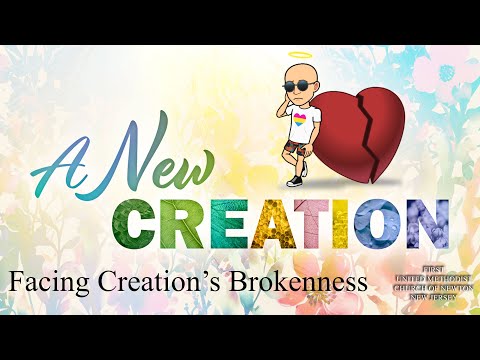
Welcome to our live-streamed Sunday Worship Services for May 5, 2024. Today we discover that humanity’s sin and brokenness has had devastating effects on the world for which we are called to care. As earth’s stewards, living into our resurrection hope involves reckoning with our failures and working for the freedom of all creation – human and nonhuman alike.

Please support us by giving online: https://tithe.ly/give?c=1377216 or https://paypal.me/newtonumc Or you can make and mail a check out to First UMC of Newton, 111 Ryerson Ave., Newton, NJ O7860

God bless you all for your generosity which is vital to our mission and ministry.

April 21, 2024 – Newton UMC – Sunday Worship Livestream

JOY Fellowship Worship Service in Holland Hall: 9:00 a.m.

Worship service streams live at 9:00 a.m. EST (-500 GMT)

Worship service streams live at 10:30 a.m. EST (-500 GMT)

Welcome to our live-streamed Sunday Worship Services for April 21, 2024. Today we discover that as human beings, we tend to think the world revolves around us! As scripture opens our eyes to the fullness of God’s creation, let us consider a shift in perspective. We are but one part of God’s magnificent creation. What does creation tell us if we listen?

Please support us by giving online: https://tithe.ly/give?c=1377216 or https://paypal.me/newtonumc Or you can make and mail a check out to First UMC of Newton, 111 Ryerson Ave., Newton, NJ O7860

God bless you all for your generosity which is vital to our mission and ministry.

April 14, 2024 – Newton UMC – Sunday Worship Livestream

JOY Fellowship Worship Service in Holland Hall: 9:00 a.m.

Worship service streams live at 9:00 a.m. EST (-500 GMT)

Worship service streams live at 10:30 a.m. EST (-500 GMT)

Welcome to our live-streamed Sunday Worship Services for April 14, 2024. Today we learn that in resurrecting, Jesus gives us hope for new life. This hope is life and joy for all creation!

Please support us by giving online: https://tithe.ly/give?c=1377216 or https://paypal.me/newtonumc Or you can make and mail a check out to First UMC of Newton, 111 Ryerson Ave., Newton, NJ O7860

God bless you all for your generosity which is vital to our mission and ministry.