Tag Archives: Matthew

REVISITED: Forgiven

Read 2 Samuel 11; Psalm 51; Matthew 6:14-15

ALSO IN SCRIPTURE

Then Peter came to Him and asked, “Lord, how often should I forgive someone who sins against me? Seven times?” “No, not seven times,” Jesus replied, “but seventy times seven! “ (Matthew 18:21-22)

Have you heard the tale of King David?  When I mention his name, images of a ruddy-faced shepherd boy might come to mind. Perhaps, you are seeing a sling-shot and a stone in the hands of a puny boy facing a monstrous giant named Goliath? Or perhaps you see the rising star of a man, named David, who quickly climbed the political ranks in Saul’s military. Perhaps you see David being chased down by an envious King who was desperately trying to hold on to the power that was never his to begin with.

But, when the name David is mentioned, do you think of the man who slept with another man’s wife and got her pregnant? Do you think of a man who had her husband sent to the front lines in a battle to be killed so that her husband would not know of the affair? Do you think of a King who has gained so much power that he forgets the very God who gave it to him?  When we read Psalm 51 and reflect on the lamenting of its author, it is hard to not think of David when he finally realizes that he was not powerful enough to hide his sins from God.

Whether or not Psalm 51 was actually written by David or not is beside the point. The fact of the matter is that the Psalmist, whoever he or she was, was certainly feeling desperately in need of God’s forgiveness. It is fitting that this Psalm gets traditionally attributed to David, in light of the great and scandalous sin that David committed. It is a Psalm that we all can relate to, as we have all found ourselves getting caught in the act of doing something we should not be doing.  We have all found ourselves on our knees, at some point or another, begging God to forgive us.

Seeking forgiveness is a part of the Christian journey.  John the Baptist preached the message of repentance…as did Jesus…as did the apostles and all of the Christians since then.  But for Jesus, seeking forgiveness was not enough. Anyone, given the right circumstances, can be pushed to do that; however, Jesus taught that it was equally important for us to be forgiving of others. “If you forgive those who sin against you, your heavenly Father will forgive you. But if you refuse to forgive others, your Father will not forgive your sins” (Matthew 6:14-15).

Now, most of us recognize that it is important to forgive others. It may be hard, and we may not want to forgive everyone, but we know that forgiveness is something God would want us to do. Yet, when we speak of forgiveness, we often only think of others.  After all, we are to forgive others, right?  What we don’t realize is that God not only wants us to forgive “others”, but God also wants us to forgive ourselves.  In fact, if we don’t forgive ourselves, how can we ever be in a place to forgive others?

We can beg God for forgiveness all day long; however, if we are unwilling to accept God’s forgiveness, then we will never receive it.  The fact of the matter is that God has already forgiven us and is waiting for us to move beyond the ashes of Lent and lamentation into the warm and bright light of Easter. Whether we are as powerful as King David or as humble and meek as a peasant child born in a stable, God is calling us to be a people of the resurrection…a people who have been forgiven, who forgive themselves, and who extend that forgiveness to others. Such people embody God’s hope, healing and wholeness!

THOUGHT OF THE DAY

“We can never obtain peace in the outer world until we make peace with ourselves.” ― Dalai Lama XIV

PRAYER

Lord, teach me the discipline of forgiveness…first for myself and then for others who have wronged me. Let my willingness to forgive bear witness to you! Amen.

REVISITED: Woken Up in a Dream

Read Matthew 1:18-25

ALSO IN SCRIPTURE
“For a child has been born for us, a son given to us; authority rests upon his shoulders; and he is named Wonderful Counselor, Mighty God, Everlasting Father, Prince of Peace.” (Isaiah 9:6)

I would like to tell you as story of a teenage girl who lived in a very tight-knit community.  She was, like the rest of her peers, expected to attend to the daily chores that were given to her each day. She was expected to carry herself in a way that brought dignity and honor to her family.  Like all families, her family expected that she was always on her best behavior and that she didn’t do anything to hurt her family’s name or image.

Her father was blue-collar, working class man. The girl’s family was pretty impoverished and what little they had came at the cost of much blood, sweat and tears.  The family never knew what tomorrow might bring and they could not afford to take anything for granted.  In fact, an offer had come to the teenage girl’s parents, one that her family could not afford to pass up.  A man had asked the girl’s father for her hand in marriage and, with such an offer, a dowry was sure to follow.  The girl was expected to comply with her parents and to marry the man they had arranged for her to marry.

But then one day, in the midst of their engagement, the girl is seen to be with child.  The groom-to-be is astonished. He swears to the parents that he has never known her the way a husband knows his wife; he swears that the child growing in her belly cannot be his. The parents, horrified, could not believe what their daughter had done; the community she lived in shunned her as a sinner, everyone looked down at her with contempt.

This is the story of Mary, a young teenager from Nazareth, who was suddenly found to be with child even though she had not yet been married.  Can you imagine the panic and terror that must have filled her when she first realized she was pregnant. Though, the author of Matthew tells us that Mary was with child “by the Holy Spirit,” one has to wonder whether she knew it or not. The author of Matthew doesn’t exactly say.  What he does point out is Joseph’s initial reaction to the situation.  He could not believe she was pregnant and he knew the child was not his; one thing was for sure, he was not going to marry her.

When we read this story, we often pass Joseph’s reaction off because we know how the story ends. We know that Jesus is the Son of God and, therefore, Joseph just seems like a guy who has little faith, until God wakes him up in a dream.  Yet, in reality, we all need to be woken up in such a dream.  After all, how many times have we passed judgment on the actions of others without truly seeing what God has in store for them? How many times have we seen a pregnant teen, an unruly child, or some other person who doesn’t fit our understanding of pure and wholesome? How many times have we passed judgment on those people?

Often times, we are much more like Joseph, quick to let our thoughts and our judgments run wild before really pausing to listen to what God is saying to us.  We often need to be woken up in a dream that shows us that the very things we are laying judgment on are filled with God’s potential if we just show love, acceptance and support rather than scorn, contempt and judgment.

Thankfully, Joseph woke up from that dream with a changed heart and chose to embrace Mary and the Christ child she was bearing! Thankfully, Joseph laid his judgments down and, as a result, unto us a hope, healing and wholeness was born into the world. The question is, will we be woken up in a dream like Joseph? This Christmas, may the advent of that awakening be within you; indeed, may it be within us all!

THOUGHT OF THE DAY
“If you judge people, you have no time to love them.” – Mother Teresa

PRAYER
Lord, help me to avoid falling into the trap of judgment. Instruct me in your ways of unconditional love, O Lord. Amen.

A LOOK BACK: Two Probing Questions

Read Mark 8:27-30; Matthew 16:13-20; Luke 9:18-21

ALSO IN SCRIPTURE

“For it is the God who said, “Let light shine out of darkness,” who has shone in our hearts to give the light of the knowledge of the glory of God in the face of Jesus Christ.” (2 Corinthians 4:6)

Anyone who has ever had me as their teacher in confirmation class can attest to the fact that I take confirmation very seriously. I have developed a curriculum that goes beyond teaching the meaning of membership to a curriculum that instructs the students to engage in Christian History from Jesus to our current day and age. The curriculum has the students actively engage theology and doctrine (and the history behind the formation of the doctrines) as well as learn about the meaning of membership in the church.

One of the exercises I have the students do as a requirement for the class is to write a 3 page paper, or longer if they desire, answering two very simple, and very Biblical questions. In Mark 8:27-30, in Matthew 16:13-20, and in Luke 9:18-21, Jesus asks his disciples who people say that he is and, following their various answers, he asks them who they say that he is. So, likewise, I have the students answer those two questions.

It is amazing how challenging such an exercise is. Most of us can easily and quickly come up with a long list of the things that people say Jesus is; however, when it comes to who we say Jesus is, if we are going to take the exercise seriously, it becomes much more difficult to articulate. But each of my students have been through the exercise and each have come away saying that the experience of it was rewarding, leaving them with a richer sense of who Jesus is to them.

When God created humanity, God did not create robots. It was not God’s intention to have an android creation that just mindlessly, and robotically, did whatever God wanted them to do. Rather, God created a free-willed, free-spirited, and free-thinking people who had the ability to not only choose to be in a relationship with God and, in that relationship, seek to come to an understanding of God and of self in the context of that relationship. As human beings, we do not only define ourselves by our own thoughts of who we are, but rather we define ourselves by the relationships we have with ourselves and with others. Who am I without my mom, my sister, my friends, my wife, my children, and myself?

Thus, if we are Christians who claim to be in a relationship with God and with Jesus the Christ, then doesn’t it make sense that we would seek out who Jesus is? Doesn’t it make sense that we would not just settle for who people say Jesus is, but that we would find out who Christ is to us? Doesn’t it makes sense that we would want to get to “know” the person we claim to love and to follow?

Perhaps it wouldn’t hurt for you to write down Jesus’ two probing questions: “Who do people say that I am?” Who do you say that I am?” God is calling you to probe deep into your faith. It is never okay to just accept things at face value. God is calling you to move beyond what you’ve been taught into the realm of personal, experiential knowledge. Who is Christ for you? How have you experienced the power and the love of Christ in your life? How has Christ healed you, been present with you, changed you, and/or challenged you? Where does your story and the Gospel story intersect? God is calling you to truly discover who Jesus is and to deepen your faith in him. Such an invitation leads to transformation and conviction. Get to know your Lord and be convicted to bear his hope, healing and wholeness to world.

THOUGHT OF THE DAY

“The steady discipline of intimate friendship with Jesus results in [people] becoming like Him.” – Harry Emerson Fosdick

PRAYER

Lord, take me deeper in my faith that I may more intimately know you and grow more and more like you. Amen.

God’s People, part 171: Matthew

Read Matthew 9:9-13

ALSO IN SCRIPTURE
“Later, Levi invited Jesus and his disciples to his home as dinner guests, along with many tax collectors and other disreputable sinners. (There were many people of this kind among Jesus’ followers.) But when the teachers of religious law who were Pharisees saw him eating with tax collectors and other sinners, they asked his disciples, ‘Why does he eat with such scum?’ When Jesus heard this, he told them, ‘Healthy people don’t need a doctor—sick people do. I have come to call not those who think they are righteous, but those who know they are sinners.’”  (Mark 2:15-17, NLT)

When we think of God’s people, we tend to think one of two things. We might think of the Israelites who were God’s “chosen people”, or we might think of specific characters in the Bible. Either way, we tend to idealize the people we are thinking about. For instance, we may think that God’s people are super faithful, holy, perform miracles and live wholly devout and righteous lives. Unfortunately, this idealism enables us to distance ourselves from being God’s people, because we feel that we fall short of those ideals. As such, I have decided to write a devotion series on specific characters in the Bible in order to show you how much these Biblical people are truly like us, and how much we are truly called to be God’s people.

Part 171: Matthew. When we think of tax collectors today, we probably think nothing more about them than that they are a person doing their job. Granted, thinking about the tax collector is different than thinking about the taxes themselves. No one, throughout all of history, has ever enjoyed paying their taxes. With that said, most of us do not personally despise the person working behind the desk at town hall, taking checks and handing out receipts.

The same thing is true when I go to my accountant to claim my file my income taxes. Sure, I may not always be happy that I owe “x” amount of dollars to the state and federal government; however, I do not personally despise my accountant for giving me the news and setting up the payments. I am sure accountants have to deal with angry people when they find out said bad news; however, I would imagine few (if any) are wishing or plotting the deaths of their accountants. Nor are they doing that for the person at town hall.

In Jesus’ day, the tax collector WAS DESPISED. They were seen as absolute traitors to their country and to their people. Why, you might ask? Because, properly speaking, they were working for the Roman Empire. Before we even go there, let me state that again: they were JEWS working for the Roman Empire to collect the imperial tax that was owed Caesar. To understand this on a deeper level, we have to understand that Israel was NOT ROMAN.

The Jews built an alliance with the Romans when during their revolt against the Seleucid Dynasty. Once the Jews won freedom from the Seleucid Empire under the leadership of the Judas Maccabeus, they established the Hasmonean Dynasty which lasted for 128 years. Toward the end of that time, a civil war broke out between supporters of the Hasmonean Dynasty and those that felt there should be no king, but that the nation should be a theocracy ruled by a council of clergy. As such, those wishing for a theocracy turned to Rome for help against the Hasmonean King and his army.

Rome saw this invite as a golden opportunity to come in and seize control of the land, which was strategic for them and, in essence, gave them control of the entire Mediterranean Sea. The rest is a long, but brutal history of oppression by the Romans that started with TAXATION. They at first taxed the people for their support and then, as they conquered all of Judea, they seized control and imposed more taxes upon them. Rome was no longer an ally; rather, Rome was sovereign and Judea was its subject, a province in the expansive Empire.

So, Jews had much disdain for anyone who aligned themselves with the empire. Tax collectors were the worst of the worst when it came to that. Not only were they fellow Jews working to collect what was due Rome, but they were also robbing their own people blind and getting rich off of it. They would charge their own people more than what they owed and kept the difference for themselves. If anyone refused to pay, they had them arrested. They were traitors.

So, when Jesus approached Levi the Tax Collector, this is who he approached. He approached a person who was viewed by everyone as a traitor to his own people and, ultimately, a traitor to God. Yet, Jesus not only approached him, but he invited him to leave behind his life of sin and to follow him. What’s more, he wipes the slate clean and renames him Matthew. No longer is he Levi the tax collector. Now he is Matthew, the disciple of Christ. And that disciple went on to become an apostle and, by tradition, the author of one of the most beloved Gospels in the New Testament.

Matthew reminds us that, no matter how much we’ve sinned and how far from God we might find ourselves, that there is a life for us in Christ. There is no sin too great, and no sinner too wicked for Christ to invite into fellowship and followership. Conversely, it should also remind us who are Christians the same exact thing! There is no sin too great, and no sinner too wicked, for us to invite into the life of the Church. After all, we’ve all been invited in, haven’t we? If we, who are sinners, can be included, then anyone can be included. Let us, as the church not forget the unconditional, radical, transformative love of our Lord and Savior Jesus Christ.

THOUGHT OF THE DAY
“Go [to God] as altogether ungodly, guilty, lost, destroyed, deserving and dropping into hell; and you shall then find favor in His sight and know that He justifies the ungodly.” – John Wesley in Justification by Faith

PRAYER
Lord, truly I am unworthy of the grace you have given me. Let your grace shine through me in a way that magnifies your glory to all the world. Amen.

God’s People, part 153: New Moses

Read Matthew 5:1-20

ALSO IN SCRIPTURE
“You have heard the law that says the punishment must match the injury: ‘An eye for an eye, and a tooth for a tooth.’ But I say, do not resist an evil person! If someone slaps you on the right cheek, offer the other cheek also.”  (Matthew 5:38-39, NLT)

When we think of God’s people, we tend to think one of two things. We might think of the Israelites who were God’s “chosen people”, or we might think of specific characters in the Bible. Either way, we tend to idealize the people we are thinking about. For instance, we may think that God’s people are super faithful, holy, perform miracles and live wholly devout and righteous lives. Unfortunately, this idealism enables us to distance ourselves from being God’s people, because we feel that we fall short of those ideals. As such, I have decided to write a devotion series on specific characters in the Bible in order to show you how much these Biblical people are truly like us, and how much we are truly called to be God’s people.

Part 153: New Moses. In Mark, we learn that Jesus true identity was revealed through his suffering and death on the cross. It was in that moment that the Roman Officer, who was an outsider to Judaism and was the one overseeing Jesus’ crucifixion, was the only human being in Mark’s Gospel who realized Jesus’ identity as the Son of God. The only other place in that Gospel that we see that title being used is at the very beginning when Mark declared it to his audience. Every other human fails to realize it. The only other beings who seem to know who Jesus is are the demons. Flattering, right? It’s no wonder that Jesus was frustrated from chapter 4 onward.

While Mark’s account was written to a predominantly Gentile community, Matthew’s Gospel is written to Jewish followers of Jesus. Thus we do not see Matthew explaining what every Jewish custom was or what certain Aramaic phrases are because, unlike Mark’s community, his community would have understood those things. Instead, because of his context, Matthew focused on connecting Jesus to the Old Testament. Thus, he starts his Gospel with Jesus’ lineage, which traces back through King David to Abraham.

More importantly, Matthew show Jesus to be the New Moses. Just as Moses came out of Egypt, Jesus came out of Egypt following him fleeing there with his parents as refugees. Just as Moses passed through the waters of the Red Sea, Jesus passed through the waters of the Jordan at his baptism. Just as Moses led the Israelites through the wilderness for 40 years, Jesus was in the wilderness and was tempted for 40 days. What’s more, just as Moses received the law from God on the mountain, Jesus gave the law from his sermon on the mount.

With that said, Matthew was not merely comparing what Jesus did to what Moses did, as if Jesus was just some sort of uncanny Mosaic doppelgänger; rather, Matthew was showing that Jesus was actually greater than Moses. Moses may have delivered the Israelites out of slavery from Egypt, but Jesus delivers all of humanity from slavery to sin and death. While Moses gave the Law to the Israelites, Jesus gave us new divine teaching that not only gave deeper insight to the heart of the Law of Moses, but that profoundly revealed that the Law not only pointed to him, but also to the opening of the covenant to all people.

Jesus, in Matthew, was not only the New Moses, but was the only one who was righteously poised to judge the world. Yet, instead of judging the world, he was judged on their behalf. Matthew shows us that Jesus was the Suffering Servant prophesied about in Isaiah 53. He came not to judge but, instead became “a ransom for many” (Matthew 20:28). Jesus’ glory is not merely revealed through the cross, but in divine birth, his fulfillment of prophecy, the breadth of his life, the authoritative scope of his teaching, the pain he endured, the punishment he suffered that led to his death, and the resurrection.

Matthew challenges us to come face-to-face with the King of kings, who is Immanuel (God with us) for all time. Will we humbly bow before our King? Will we accept his divine teachings and follow them intently? Will we trust in his ability to save us from our sinful humanity? Will we follow him, even if it means dying on a cross like he did (Matthew 16:24)? If we answer yes to that question then we MUST take seriously Christ’s teachings and follow his great commission found in Matthew 28. Let us all follow Christ, by the power of the Holy Spirit, who is Lord of all!

THOUGHT OF THE DAY
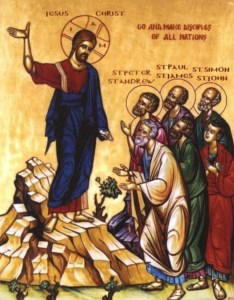
“I have been given all authority in heaven and on earth. Therefore, go and make disciples of all the nations, baptizing them in the name of the Father and the Son and the Holy Spirit. Teach these new disciples to obey all the commands I have given you. And be sure of this: I am with you always, even to the end of the age.” – Jesus Christ  (Matthew 28:18-20, NLT)

PRAYER
Lord, I want to be a Christian in my heart. Help me to be your follower. Amen.

God’s People, part 133: The Gospels

Read Luke 1:1-4

ALSO IN SCRIPTURE
“This is the Good News about Jesus the Messiah, the Son of God.”  (Mark 1:1 NLT)z

When we think of God’s people, we tend to think one of two things. We might think of the Israelites who were God’s “chosen people”, or we might think of specific characters in the Bible. Either way, we tend to idealize the people we are thinking about. For instance, we may think that God’s people are super faithful, holy, perform miracles and live wholly devout and righteous lives. Unfortunately, this idealism enables us to distance ourselves from being God’s people, because we feel that we fall short of those ideals. As such, I have decided to write a devotion series on specific characters in the Bible in order to show you how much these Biblical people are truly like us, and how much we are truly called to be God’s people.

Part 133: The Gospels.

Matthew, Mark, Luke, and John,
Bless the bed that I lay on.
Four corners to my bed,
Four angels ‘round my head;
One to watch and one to pray,
And two to bear my soul away.

Many, myself included, grew up reciting this beautiful (and, yet, strangely chilling) bedtime prayer while a child. In this prayer, children and adults alike are praying to the four saints who wrote the four Gospels: Matthew, Mark, Luke and John. Often when people think of the Gospels, they think of just one account told by those four different people. On top of that, much of our understanding of Jesus is really a conglomeration of those four gospels.

When reading the Gospels, one must take into account that they were written in first century of the common era and not in the 21st century. That means that, in order to fully understand the significance of the Gospels for our lives today, we have to take into account what they were actually conveying to people in the first century. This is not just true of the Gospels, but of any text written in any period of time in history.

What’s more, the Gospels were not written as historical accounts in the sense of 21st Century, objective, impartial history; rather, the Gospels were a marriage between history, theology, and socio-political commentary. The latter may take some by surprise as we in the 21st century like to try to separate religion from politics; however, in the 1st century there was no such divorce between the two.

For instance, when Jesus is given the title Son of God, that is not only a theological truth being conveyed, it is also a statement against Caesar who was known to the world at the time as divi filius, or son of a God. Important still, the Gospels are absolutely setting up Jesus Christ and God’s Kingdom in contrast and opposition to Caesar and the kingdom of the world. In other words, the Gospels very intentionally call the reader to choose between the empire and the world order and Jesus Christ and God’s Kingdom. The two are mutually exclusive; a person can either choose one or the other, but not both.

It is also important to note that the Gospels are NOT the earliest writings in the New Testatment; instead, Pauls’ epistles (aka letters) are the oldest writings in the New Testament. Paul wrote between the 50s and 60s CE (his earliest epistle only being written about 25-30 years after Christ’s death). The earliest Gospel (which is the Gospel of Mark) was written in about 70 CE (about 40-45 years after Christ’s death).

Why is this important to note? Because many people will argue that we ought not to take Paul as seriously as the Jesus’ teachings. The problem with that line of thinking is that Paul’s writings get us the closest to the earliest Christians and to what their theology was. What’s more, the Gospels are very much influenced by and, sometimes, in reaction to Paul’s teachings. Plain and simple, Paul cannot be dismissed.

The challenge for us is this, when we approach the Gospels, let us not look at them as one story told by four different people of the same mind; rather let us see them as four separate accounts, sometimes playing off of one another, teaching us different aspects and angles on our Lord and Savior Jesus Christ. Let us not look at the Gospels as a mere historical account telling us facts and figures, but let us see it for all of the rich depth with which it was written.

THOUGHT OF THE DAY
If you would like to read the Gospels in the order they were most likely written, start with Mark (ca. 66-70 CE), then Matthew (ca. 80-90 CE), then Luke (ca. 80-110 CE) and finish with John (ca. 90-110 CE)

PRAYER
Lord, enrich my life and my faith through the account of your Son, Jesus Christ, in the Gospels. I believe and put my faith in Christ and Christ alone. Amen.

God’s People, part 34: Jephthah

Read Judges 11

ALSO IN SCRIPTURE
But I say, do not make any vows! Just say a simple, ‘Yes, I will,’ or ‘No, I won’t.’ Anything beyond this is from the evil one.” (Matthew 5:34a, 37 NLT)

When we think of God’s people, we tend to think one of two things. We might think of the Israelites who were God’s “chosen people”, or we might think of specific characters in the Bible. Either way, we tend to idealize the people we are thinking about. For instance, we may think that God’s people are super faithful, holy, perform miracles and live wholly devout and righteous lives. Unfortunately, this idealism enables us to distance ourselves from being God’s people, because we feel that we fall short of those ideals. As such, I have decided to write a devotion series on specific characters in the Bible in order to show you how much these Biblical people are truly like us, and how much we are truly called to be God’s people.

Part 34: Jephthah. Daughter, O daughter, wherefore art thou daughter? I wonder if you have even heard the name Jephthah before. He was, believe it or not, one of the major judges who rose up to deliver Israel from her enemies. He was a judge for a period of six years and was a great, great warrior. Yet, like all of God’s people, Jephthah was far from perfect.

The Bible indicates that Jephthah was the son of Gilead and a prostitute, who lived in the land of Gilead. Given the nature of a prostitute’s job, this might mean that his father was not named Gilead, but was unknown. In other words, his father could have been any one of the men of Gilead consorting with a prostitute. So, the great and mighty warrior’s story starts off with the detail that he was an “illegitimate child”.

Yet, this child (as all children are) was created and loved by God, and he rose up to defend his people against the Ammonites. With that said, he was reluctant to at first, because of the way he had been treated by his own people, the Israelites. Since his birth was scandalous, he was shunned and driven out of Gilead by the residents there. He was told he would have no inheritance in his father’s house. Again, his father might have been named Gilead, or this might be symbolic of not being welcome in his home town due to the scandalous nature surrounding his mother.

When asked to defend Israel against Ammon, Jephthah refused to do so unless they made him a permanent ruler over all the Israelites. The people, desperate for his help, vowed an oath under God to make him the permanent ruler. So, Jephthah agreed to lead the Israelites against the Ammonites. Scripture tells us that he was filled with the Spirit of God; however, Jephthah wanted to ensure victory and, in doing so, made a tragic and fatal mistake. He vowed that if the Lord would give him victory, he would sacrifice the first thing that walked through the front door of his house.

What a silly, silly vow. Why would he vow such a thing? Didn’t Jephthah know that the first thing that would walk through his door was his one and only daughter? This is, yet again, another one of more vile texts we find in the Bible, for Jephthah does indeed hold true to his vow to God and sacrifices (aka murders) his daughter. He lets her wander the hillside with her friends for two months but, following that, he sacrifices her.

The Bible is not clear as to whether or not God wanted such a sacrifice, or whether God wanted Jephthah to carry that sacrifice through. All we have is the vow that he made and the action that he carried out. With that said, God’s silence does not mean that this is what God wanted, let alone what God demanded. The reality is that people do all sorts of evil and sick things, and God does not come down out of the heavens (as was the case with Abraham) to stop them from carrying it forward.

The point of this story is not to take it literally and get hooked on the gory and horrific details. The point of is to learn something about ourselves in it. Had Jephthah trusted that the Spirit of the LORD was with him, he would not have made such a rash, foolish and ultimately tragic vow. Had he merely trusted in God’s presence, he would have simply led his people out to victory and won. Instead, by trying to secure his victory through bartering with God, he put himself and his daughter in a situation that should have never existed.

I believe that Jephthah should have never carried that vow out to conclusion, just as he should have never made the vow to begin with; however, he did what he did and we’re left horrified by the whole scenario. Let this be a reminder to us that we need not barter with God, as if God can be bought by our silly vows and promises. All God asks of us is to seek to live justly, to love mercy, and to walk humbly with the LORD, our God. The challenge for us is to be satisfied in our faith, to be satisfied with the assurance Scripture gives us of God’s presence in our lives, to be confident in the hope that GOD will not abandon us, and that salvation and deliverance will come. Why? Because God delivers and is faithful. Let us be faithful back to God and place our trust in the Holy Spirit within us.

THOUGHT OF THE DAY
“Those that vow the most are the least sincere.” – Richard Brinsely Sheridan
 PRAYER
Lord, your Holy Spirit is within. Give me the assurance to trust in your presence. Amen.

The Beatitudes, part 3: Mourners

Read Matthew 5:4; Luke 6:21b

ALSO IN SCRIPTURE
“The LORD is close to the brokenhearted; He rescues those whose spirits are crushed.” (Psalms 34:18 NLT)

Jesus continued his bestowal of blessings, “Blessed are those who mourn, for they will be comforted.” The words rang out and filled the ears and souls of the multitude of people gathered around Jesus that day. There was much to mourn in their day and age, there had been much to be grieved over. Under the weight of such suffering, there wasn’t a single soul among Jesus’ followers who hadn’t been in some state of mourning or another.

Whether rich or poor, whether powerful or weak, whether a person of status or a peasant, all were in a state of grief over the travesty of being subjegated to the Roman Empire. Sure, there were some who had much to gain from Rome’s presence. The High Priest, Caiaphas, and his whole priestly family benefited from Rome. According to Flavius Josephus, Annas (the same Annas who took part in Jesus’ mock trial) was appointed High Priest in 6 CE by the Roman Governor Quirinius as the first High Priest of the new Roman Province of Iudaea (aka Judea). He served in that role until he was deposed by the Roman Governor Gratus in 15 CE and was replaced by his son, Eleazar, in 16 CE. In 17 CE, Gratus deposed Eleazar and appointed Annas’ son-in-law, Joseph son of Caiaphas (aka Caiaphas) as the high priest.

There were others who also had much to gain. Herod, an Idumaean Jew, and his family gained power under Rome, as did those who supported Herod’s agenda of Hellenizing Judea (aka the Herodians). Yet, even they were not without their mourning for, under the Roman boot, no one was truly free to do as they pleased, not even Herod. Following Herod’s death, Caesar Augustus refused to give any of his children the title of king, but appointed three of his sons as governors. Herod’s son Archelaus, though willed by his father to be king, was eventually deposed by Augustus and the regions he ruled (Samaria, Judah, and Idumaea) were consolodated into a new Roman province of Iudaea (aka Judea) and placed directly under Roman Rule. Antipas and Phillip both kept governorship of their regions, but the tension between them and Rome was thick.

So, yes, many had much to mourn over in the days and years Jesus of Nazareth walked the earth, and no doubt, everyone has something to mourn about in our day and age as well; however, Jesus was not merely speaking to those who mourned in the physical sense, as it is often misunderstood. Jesus was, in actuality, speaking to those who mourn in both the physical and spiritual senses.

Without doubt, by using the phrase “those who mourn”, Jesus is referring to the poor. This can be evidenced in Luke’s literal interpretation of this famous beatitude (Luke 6:21b). With that said, I would once again caution anyone from rushing to the judgment that Matthew is “spiritualizing” Jesus’ words. First, it is more than likely that Luke was written after Matthew, not beforehand. Thus, chronologically speaking, it would be more likely that Luke “literalized” the words of Jesus found in Matthew, and even that’s just as unlikely. Second, since the mysterious Q source of Jesus’ sayings has never been found, only speculative (and not empirical) claims can be made regarding what Jesus was actually recorded as saying. Without empirical evidence, there’s no reason to believe that either Matthew or Luke are detracting from what Jesus said, but more or less expounding upon it.

Lastly and most importantly, Matthew’s text (regardless of the points above) does not exclude the literal poor, but most certainly includes them when mentioning those who mourn. Blessed are they who mourn because of the greed, the corruption, the power, and oppression of the wicked, for they will be comforted. Also included in this group of blessed people are those who mourn and lament because of how far wayward God’s people had gone as a result of greed, corruption and abuse of power. Blessed are those mourners for they, too, will be comforted when God’s Kingdom finally and fully reigns on the earth.

What’s more, as will be seen later in the beatitudes, the mourners are not merely those who are helpless and voiceless against injustice, but those who stand up against it and face the consequences of doing so. Blessed are those who mourn, for they will be comforted. The question for you is, which one of these are you? Are you one of the poor and helpless who mourn? Are you one of those who mourn and lament over injustice and stand up against it, or are you one of those who our Lord (Matthew 23; Luke 6:24-26) declares a series of woes against? Challenge yourself to earnestly reflect on this, not only this week, but always.

THOUGHT OF THE DAY
“Good God, if our civilization were to sober up for a couple of days it’d die of remorse on the third.” – Malcom Lowry
PRAYER
Lord, as I mourn the way this world is, empower me to follow you and change it. Amen.

Matthew, Mark, Luke and John

Read Luke 1:1-4

ALSO IN SCRIPTURE
“This is the Good News about Jesus the Messiah, the Son of God.” (Mark 1:1)

“Matthew, Mark, Luke and John, bless the bed that I lie on. Four corners to my bed, four angels round my head; one to watch and one to pray, and two to bear my soul away.” There is nothing quite like children’s nursery rhymes, is there? Especially religious ones that point to a God that all little children had better fear. I grew up reciting this rhyme as young boy, subconsciously digesting it’s grim and rather creepy message. This rhyme basically says that you had better be in line with the four Gospels if you would like God’s protection when you sleep, and it doesn’t hesitate to remind you that you could die in your sleep. So if you would like angels to guard you and/or carry your soul to heaven, you had better be blessed by the Gospels. That’s rather funny being that the word gospel literally means “good news” and is the “good news” of Jesus Christ, not Matthew, Mark, Luke or John.

It is amazing to me that so many people claim to be Christian in this country and, yet, few people are literate to what the Gospels actually say. We recite quaint little rhymes, we remember the Sunday School stories taught to us at young ages, and we even watch movies that are, when you think of it, only loosely based on the Gospels; however, most people do not pick up the Gospels and read them for themselves. And, when people do pick up the Gospels and read it, they read it as if they are a cohesive, singular story that were written by Matthew, Mark, Luke and John who were sitting side by side and consulting with each other on what they remember the Lord saying and doing. Here’s an example. Tell yourself what you know about Jesus’ birth. You will probably think of Mary and Joseph journeying to Bethlehem, being forced to sleep in a manger because there was no room at the inn, and being visited by 3 wise men who brought gifts, as well as by shepherds who got a full choral performance by the Vienna Boys’ Choir of angels.

Yet, I bet you didn’t realize that Mary and Joseph only get put in a manger in Luke, not Matthew. And the Wise Men are only mentioned in Matthew and not in Luke, not to mention the author of Matthew (we don’t actually know his real name, as he never actually gave it) never numbered the wise men to three. What’s more the shepherds only show up in Luke and not in Matthew. Let me also point this out, the birth narrative is ONLY found in Matthew and Luke. It is absent in Mark and John. Is your head spinning yet? What do we make of this? Should we question the accuracy of the Gospels?

The answer, in short, is absolutely not! If the authors were looking to write a 21st century, scientific, history textbook, then we should definitely question their accuracy; however, that is not what they were writing. They were writing a Gospel which combines loosely recorded historical figures and events that are combined with narratives woven around what were the known sayings, teachings and deeds of Jesus of Nazareth, who they witnessed and experienced as the Christ. To simplify this a bit, what the authors were writing was a THEOLOGY on WHO JESUS IS and WHY THAT IS GOOD NEWS. That is what these authors were concerned with, reporting the GOOD NEWS of JESUS CHRIST to their communities.

My challenge to you is for you to read the Gospels. Read them in the order they were written Mark (ca. 68-70 CE), Matthew (ca. 80-90 CE), Luke (ca. 80-90 CE), and John (ca. 90-100 CE). Read them separately, taking each one on its own terms. Get a feel for what truths each author would like to convey to you about Jesus, the Christ, the son of God. Let them inform you, rather than you trying to inform them, and be amazed at the dynamic, living, and powerful Christ that will meet you in the process. There are no books in the world more influential that the Gospels and there is a reason for that. Read them as they are and be transformed by the good news of Jesus Christ.

THOUGHT OF THE DAY
“While facts are beholden to truth, truth is not beholden to fact.” – Rev. Todd R. Lattig

PRAYER
Lord, speak the truth of your good news to my heart so that I may see you as you wish to be revealed to me, through the faithful witness of others as well as through my own experience. Amen.