Tag Archives: Moses

Shine, Baby, Shine

Read Exodus 34:29-35

ALSO IN SCRIPTURE
“So all of us who have had that veil removed can see and reflect the glory of the Lord. And the Lord—who is the Spirit—makes us more and more like him as we are changed into his glorious image” (2 Corinthians 3:18 NLT).

In the ancient account of Moses descending from Mount Sinai, something extraordinary happens—he’s glowing! Picture that lantern in the garden, but instead of just glowing with firelight, Moses glows with the very presence of God. It’s as though he’s carrying a piece of heaven with him.

Like the lantern, Moses doesn’t even realize he’s glowing. It’s because he’s been talking to God up on the mountain, and the closeness to God’s presence has left its mark on him. When the people see Moses, they’re amazed but also a bit scared because he looks so different.

Think about those moments when you’ve felt close to God—maybe during prayer, or when you’ve experienced a sense of peace or joy. It’s like a warm feeling inside, isn’t it? That’s God’s presence shining through you, just like the light shining through the lantern.

Just as the lantern’s light draws people in, our lives can show others how amazing God is. When they see us being kind, forgiving, or joyful even when things are tough, they might want to know more about God too.

The passage of Moses coming down from the mountain offers us profound insights into the transformative power of encountering God’s presence. As we delve deeper into this acount, we discover layers of meaning that resonate with our own journey of faith.

So, imagine Moses walking down from this big, tall mountain, holding these special tablets from God. But here’s the thing—Moses didn’t even realize his face was shining super bright because he had been spending time with God up there. It was like God’s glow rubbed off on him.

Just like how a lantern lights up a dark room, God’s presence can light up our lives. When we pray, go to church, or think about God, it’s like adding fuel to a fire. We get closer to God, and His light shines brighter in us.

And when we’re filled with God’s light, it shows! People notice something different about us. They see how we act with kindness and love, even when things are tough. It’s like we’re carrying a piece of God’s love with us wherever we go.

But sometimes, we might feel like we need to hide that light. Maybe we’re too busy or worried about what others will think.  That’s okay—God’s light is still inside us, waiting to shine again when we’re ready to answer God’s call.  Even when things get hard, God’s light is always there, ready to help us and guide us.

So, let’s remember Moses and his glowing face. Let’s spend time with God and let His light shine through us, so we can show others how awesome God’s love is. And even when life gets tough, let’s not forget that God’s light is always with us, ready to help us through anything.

As we journey through the Lenten season, let us reflect on the radiant lantern in the garden and the luminous face of Moses. Let us draw near to God with open hearts, allowing His presence to ignite the flame within us and illuminate our lives with His love. And let us shine brightly, like beacons in the night, pointing others toward the source of all light and life.

THOUGHT OF THE DAY
“Darkness cannot drive out darkness; only light can do that. Hate cannot drive out hate; only love can do that.” – Martin Luther King Jr.

PRAYER
Dear God, thank You for being with me and for changing me from the inside out. Help me to spend time with You and to let Your light shine through me to others. May I be like Moses, bringing Your love and hope to everyone we meet. In Jesus’ name I pray, Amen.

Devotion written by Rev. Todd R. Lattig with the assistance of ChatGPT, an AI language model developed by OpenAI.

REVISITED: Trashing the Time Machine

Read Exodus 3:1-14; Revelation 1:8; 21:6; 22:13

ALSO IN SCRIPTURE
“Listen! I am standing at the door, knocking; if you hear my voice and open the door, I will come in to you and eat with you, and you with me.” (Revelation 3:20)

Have you ever read the novella, “The Time Machine”, or are at least familiar with the film adaptations of the same name?  In the novella, H. G. Wells develops a character called the Time Traveler who believes he has invented a machine that can travel through time. Indeed, he had developed such a machine and travels to the year 802,701 A.D. where he runs into the Eloi, which he theorizes are a peaceful communist society and the result of nature being overtaken by human technology, in which humanity learned to adapt to an environment where they didn’t really need strength or intellect.

He also runs into the Morlock who are ape-like in appearance and who live underground. The Morlocks attack the Eloi and, to make a long story short, the Time Traveler comes to the realization that they are hunting and eating the Eloi, who are too carefree to doing anything about it.  The Time Traveler eventually has to make an escape as he too falls prey of the Morlock and he moves 30 million years into the future and sees what appears to him to be the end of the world.  Eventually, he returns back to his own time and tells his disbelieving dinner guests all that he has seen in the future.

Often, when we think of God and of God being eternal, we think of a timeline. We think of a linear line that stretches from beginning to end, one that can be looked back upon and can be travelled into the future on, much like the way the novella “The Time Machine” is set up.  When we think of the word “eternal”, we think of something that stretches on and one forever.  What’s more, we believe this to be backed up Biblically because, after all, doesn’t both God and Jesus claim in Revelation to be the Alpha and the Omega, the beginning and the end?

Yet, that is a misunderstanding of what it means to be the beginning and the end. It is true that in God is both the beginning and the end of all things; however, God never began and never ends. In eternity there is no beginning and no end. There just is. In other words, God was not in the past, nor will God be in the future, rather God is always in the present.  There is only ever presence in the present.

In Exodus, when Moses asked God to tell him who he should say sent him to the Hebrews, God replied, “I AM WHO I AM…tell them that I AM sent you.” God’s own self-definition is that GOD IS.  Notice that God did not say to Moses, “Tell them that I WAS or I WILL BE sent you.”  What kind of hope is there in a God that WAS or a God that WILL BE?  God is not a God of the past or the present. Such things do not truly exist. All that really exists is the PRESENT…right here and right now.

God is not calling us to dwell in our past or worry about our future. Rather God is calling us to live in the present.  It is in the present that we inherit the Kingdom of Heaven. It is in the present that we are enveloped by the presence of God. It is in the present that we enter into eternity. It is in the present that we live and that is exactly where God meets us. While we as human beings may measure time in three tenses (past, present and future), God is calling us to live in the present in a way that reflects the reality of God’s present presence. Remember that eternity is at our door, we only need to open up the door and let it in.

THOUGHT OF THE DAY
How much of the present is wasted living in the past and/or worrying about the future?

PRAYER
Lord, help me to recognize your presence with me right here and right now. Help me to reflect the truth of your present presence to all I come in contact with. Amen.

REVISITED: I Am You

John 8:48-59

ALSO IN SCRIPTURE

“It is the LORD who goes before you. He will be with you; he will not fail you or forsake you. Do not fear or be dismayed.” (Deuteronomy 31:8)

One of my all time favorite music bands is a band called Demon Hunter. Now I am sure that, judging from the name, you can probably tell that they are Heavy Metal band. If so, you are absolutely correct. I am also sure that, judging by the name, some of you might be questioning why someone like would be listening to a band with that kind of a name. Well, the truth be told, I listen to all sorts of music from classical to heavy metal, from Christian to secular music. In fact, sometimes I find a deeper spirit-filled theology (whether it was on purpose or accidental) in secular music than I do in Christian music.

With all of that said, Demon Hunter is actually a Christian heavy metal band who writes music that really speak to me as a person who knows what it is like to struggle in life. I know what it means to be depressed, to feel hopeless, to feel like the world might be literally crushing me, to feel like I am at wits end, and to feel like no one truly understands me. The lyrics that Ryan Clark write for Demon Hunter are ones that reach out to people who struggle in life, it is their ministry to do so and God certainly has blessed them, and those listening to them, as a result of doing that ministry.

There is a song that they write called, I AM YOU. In this song, Ryan writes, “A new voice for the broken souls in a world awaiting its death—I am you—an everlasting well of life for the hopeless and the wrecked I am the dying self, the narrow path, the calm that conquered the storm—I am you—the cross-hairs on the head of shame, the negation to conform.” For the longest time, I interpreted this to mean that Ryan, the singer, was saying that he was like anyone else and that he, too, has struggled in his life. I am certain that, in part, he is saying that.

This time around, however, I began to see the song in a whole new light. I began to hear God’s voice in it. After all, is it not true that God is a new voice for the broken souls? Is it not true that God is an everlasting well of life for the hopeless and the wrecked? Did Jesus not embody the dying self, the narrow path, the calm that conquered the storm? Did Jesus not set the cross-hairs on the head of shame, and represented the negation to conform? To Moses, God revealed Godself as I AM. In Jesus, God revealed to the world, I AM YOU.

What a wonderfully powerful notion that God is one of us. That God knows what it means to struggle. After all, which one of us has not struggled in this life? Which one of us have remained completely unscathed from childhood to whatever age we are at now? Which one of us has lived a perfect, paradise-like existence without any pain, loss or suffering? I am imagining the answer to be: NONE OF US.

Then how powerful of a message it is for us to receive that God is one of us and knows how to conquer the struggles we face everyday. It is a wonderful message that God is not above us or somewhere out there watching us from afar but, rather, God is with us…God is in us. When we truly embrace that, we will recognize that God is not only with us, but God is with us wherever we go. Once we realize that truth, we will see that when we are in the lives of others…when We reach out to others with compassion and say, “It’s okay, I AM YOU”, we are showing such people that God is with them too…you are giving them the good news of God’s presence and of God’s hope, healing and wholeness.

THOUGHT OF THE DAY

“Everyone has inside of him a piece of good news. The good news is that you don’t know how great you can be! How much you can love! What you can accomplish! And what your potential is!” – Anne Frank

PRAYER

Lord, fill me with your Good News and send me out to bring it to others. Amen.

REVISITED: I WILL BE

Read 2 Samuel 7:1-13

ALSO IN SCRIPTURE
God said to Moses, “I [WILL BE] WHO I [WILL BE].” (Exodus 3:14)

Limited. If there is one word I can come up with when thinking about human beings, it is “limited.” We are limited in our perceptions, limited in our abilities, limited in our vision, and limited in just about every other aspect of our being. This is not a negative judgment, but rather an observation. In our minds, we love to imagine ourselves as being limitless. We watch TV shows and movies about superheroes who seem to be unlimited in their abilities, heroes who can literally fly to the moon and back in a single bound.

Yet, our reality is far different from the ideal we hold in our heads. The truth is that, as much as we would love to not have limits or bounds, we are totally limited. We are limited in our physical abilities, our psychological abilities, and we are limited emotionally as well. While all of this seems pretty pessimistic, and I am sure you are wondering what kind of point I could possibly be leading up to in this dour opening to a reflection, the truth is that this is not pessimistic. In fact, it is neither pessimistic or optimistic; rather, this is realistic.

What’s more, not only are we naturally limited in our capabilities but we limit ourselves in ways we should not be limited. While this is the case in a wide range of things, and across a wide range of people, I want to focus on Christians. While we are called to be a people of faith, we limit ourselves by our fear. We allow our fears to take over in our lives and we make them our lord rather than following our true Lord and Savior. We limit our understanding and conception of God as well. We build up church institutions, create polity to govern and control them, raise up church buildings, and fill those buildings with people. Over time, the people get so caught up in the institution, the polity, the buildings and their own little cloistered community that they end up limiting God to their own time, place and context.

In other words, they try and box God in. That’s not to say that God is actually boxed in or that God is actually limited; rather, it is people’s perceptions of God that are limited. This is nothing new, David wanted to box God in when he wanted to build God a house. God’s response to David was this: “Do I need you to build me a house? Am I not the God who created the world and all that is in it? Am I not the God who wandered with my people through the wilderness without any temple or house to live in? Do I really need a home? No, David! You will not build me a house.”

God WILL NOT be boxed in. Up on Sinai, when Moses asked who he should tell had sent him to free the Hebrews, God responded by saying “I AM WHO I AM. Tell them that I AM has sent you to them.” That phrase, “I AM WHO I AM”, can in Hebrew also be translated as “I WILL BE WHO I WILL BE.” God’s message to Moses, and to us as well, is that GOD IS. That God is with us, that God is always present with us. I AM WHO I AM. On top of that God is also reminding us, perhaps even warning us, I WILL BE WHO I WILL BE.

We cannot box God in. We cannot contain God and we can not have control over who God is or how God will manifest in the lives of others. Are you boxing God in? If so, in what ways? I challenge you to ask yourself those questions. Wrestle with them, for God wants you to trade in your perceptions for the reality and the universality of God’s presence and God’s love. GOD WILL NOT BE BOXED IN. The only house God wants to reside in is our hearts. I pray that, if you haven’t already, you open your hearts to the GOD. I pray that you are filled with the great I AM WHO I AM and that you are opened to the limitless possibilities of a God who WILL BE WHO GOD WILL BE.

THOUGHT OF THE DAY
Boxes are square or rectangular, have a beginning, an end, and are not infinite or eternal. God is not a box; rather, God is a circle of which has no beginning, no end and is both infinite and eternal.

PRAYER
Lord, help me not to limit who you are in my life or in my world. You are the great I AM, as well as the great I WILL BE. Amen.

REVISTED: I AM

Read Exodus 3:1-14

ALSO IN SCRIPTURE
“I assure you,” Jesus replied, “before Abraham was, I Am.” (John 8:58 CEB)

One of the most powerful stories in all of the Bible, for me, is the story of Moses and the burning bush. While the concept of a bush that is on fire but not consumed is pretty cool in and of itself, but that miracle is not what draws me to the story. It is also pretty awesome that a voice is coming from this burning bush, but that is not what draws me in. I mean sure, that would be pretty powerful to witness, at least in the moment. It might even be powerful and remain cool the next couple of days; however, overtime it would end up getting stored on the back shelves of cool things in my mind, right along with sightings of ghosts, my first kiss, and other such things.

As we know, Moses was tending sheep at the base of Mount Horeb (aka Mount Sinai) when he looked up on the mountain and saw an odd flickering light. It looked to him like a fire and, like most people would, Moses went up on the mountain to check it out. Upon reaching the flickering light, he noticed that it was a bush that was totally caught up in flames, but wasn’t actually burning. In fact, it is kind of ironic that this bush became known as the “burning bush” because it wasn’t burning at all. Naturally, and probably cautiously, Moses began to step closer and closer to the bush. As he approached it, a voice cried out from the flames, “Moses, remove your sandals for you are standing on holy ground.” Now, I don’t know about you, but if I heard that I would have thrown myself off the mountain in fear. Moses was far braver than I and he did as the voice instructed him.

To make a long story short, and so as to not completely repeat the story you already just read in your Bible or e-Bible, Moses ended up having a complete conversation with this disembodied voice emanating from the not-so-burning bush. This voice told Moses that he was the voice of God and that it wanted Moses to carry out a very important task: to go back to Egypt and meet with Pharoah, telling him to let God’s people go. Moses tried to turn down God’s call, but to no avail. Finally, after Moses realized that God had convinced him to go, he asked, “Who should I tell my people sent me when they ask?” God’s answer is what, for me makes this one of the most powerful stories. God replied, “I AM WHO I AM. Tell them I AM sent you.”

Now, on the one hand, that must have thrown Moses for a loop. How could Moses even consider that an acceptable answer? Would people really get what he meant when he said “I AM” has sent me to you, let alone believe him? Yet, Moses carries that message to the Hebrew slaves, “I AM” has sent me to you. What is powerful about that is that it fundamentally shows us who our GOD is. Our God is our I AM. God is always with us, present with us in all of our struggles and trials. Our God is always with us, celebrating with us in our joys and triumphs. Our God is the great I AM. There could never be any greater hope than the hope of God’s presence with us.

From this account of God’s eternal presence comes a powerful message for us. If our God is the great I AM, and if we are the children of God, then it follows that WE ARE. Each and every one of us ARE. We have been created to celebrate the I AM within us. We have been created to live and to live abundantly. We have been created to BE, and celebrate our BEING. Do you do this? Do you celebrate who you are? Do you celebrate the divine I AM that resides in you? Do you see yourself as a child of the great I AM? Today’s challenge, and really everyday’s challenge, is this: look at yourself in the mirror. Stare into your own eyes. Stare deeply, get lost in the iris sea and peer into your soul. When the moment feels right, I want you to say the following words out loud to yourself: “I AM.” Seriously, look yourself in the mirror, get to know yourself and tell yourself, “I AM.” Then, go out into your day, everyday, and see the divine I AM in others. In that I AM will set you and others free.

THOUGHT OF THE DAY
“I am what I am. I love me! And I don’t mean that egotistically – I love that God has allowed me to take whatever it was that I had and to make something out of it.” – Stevie Wonder

PRAYER
Lord, I am because YOU ARE. Thank you for making me who I am and help me to fully realize who I am. Amen.

God’s People, part 153: New Moses

Read Matthew 5:1-20

ALSO IN SCRIPTURE
“You have heard the law that says the punishment must match the injury: ‘An eye for an eye, and a tooth for a tooth.’ But I say, do not resist an evil person! If someone slaps you on the right cheek, offer the other cheek also.”  (Matthew 5:38-39, NLT)

When we think of God’s people, we tend to think one of two things. We might think of the Israelites who were God’s “chosen people”, or we might think of specific characters in the Bible. Either way, we tend to idealize the people we are thinking about. For instance, we may think that God’s people are super faithful, holy, perform miracles and live wholly devout and righteous lives. Unfortunately, this idealism enables us to distance ourselves from being God’s people, because we feel that we fall short of those ideals. As such, I have decided to write a devotion series on specific characters in the Bible in order to show you how much these Biblical people are truly like us, and how much we are truly called to be God’s people.

Part 153: New Moses. In Mark, we learn that Jesus true identity was revealed through his suffering and death on the cross. It was in that moment that the Roman Officer, who was an outsider to Judaism and was the one overseeing Jesus’ crucifixion, was the only human being in Mark’s Gospel who realized Jesus’ identity as the Son of God. The only other place in that Gospel that we see that title being used is at the very beginning when Mark declared it to his audience. Every other human fails to realize it. The only other beings who seem to know who Jesus is are the demons. Flattering, right? It’s no wonder that Jesus was frustrated from chapter 4 onward.

While Mark’s account was written to a predominantly Gentile community, Matthew’s Gospel is written to Jewish followers of Jesus. Thus we do not see Matthew explaining what every Jewish custom was or what certain Aramaic phrases are because, unlike Mark’s community, his community would have understood those things. Instead, because of his context, Matthew focused on connecting Jesus to the Old Testament. Thus, he starts his Gospel with Jesus’ lineage, which traces back through King David to Abraham.

More importantly, Matthew show Jesus to be the New Moses. Just as Moses came out of Egypt, Jesus came out of Egypt following him fleeing there with his parents as refugees. Just as Moses passed through the waters of the Red Sea, Jesus passed through the waters of the Jordan at his baptism. Just as Moses led the Israelites through the wilderness for 40 years, Jesus was in the wilderness and was tempted for 40 days. What’s more, just as Moses received the law from God on the mountain, Jesus gave the law from his sermon on the mount.

With that said, Matthew was not merely comparing what Jesus did to what Moses did, as if Jesus was just some sort of uncanny Mosaic doppelgänger; rather, Matthew was showing that Jesus was actually greater than Moses. Moses may have delivered the Israelites out of slavery from Egypt, but Jesus delivers all of humanity from slavery to sin and death. While Moses gave the Law to the Israelites, Jesus gave us new divine teaching that not only gave deeper insight to the heart of the Law of Moses, but that profoundly revealed that the Law not only pointed to him, but also to the opening of the covenant to all people.

Jesus, in Matthew, was not only the New Moses, but was the only one who was righteously poised to judge the world. Yet, instead of judging the world, he was judged on their behalf. Matthew shows us that Jesus was the Suffering Servant prophesied about in Isaiah 53. He came not to judge but, instead became “a ransom for many” (Matthew 20:28). Jesus’ glory is not merely revealed through the cross, but in divine birth, his fulfillment of prophecy, the breadth of his life, the authoritative scope of his teaching, the pain he endured, the punishment he suffered that led to his death, and the resurrection.

Matthew challenges us to come face-to-face with the King of kings, who is Immanuel (God with us) for all time. Will we humbly bow before our King? Will we accept his divine teachings and follow them intently? Will we trust in his ability to save us from our sinful humanity? Will we follow him, even if it means dying on a cross like he did (Matthew 16:24)? If we answer yes to that question then we MUST take seriously Christ’s teachings and follow his great commission found in Matthew 28. Let us all follow Christ, by the power of the Holy Spirit, who is Lord of all!

THOUGHT OF THE DAY
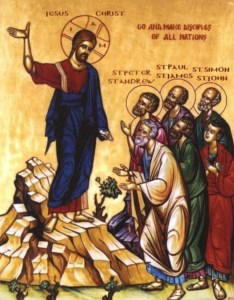
“I have been given all authority in heaven and on earth. Therefore, go and make disciples of all the nations, baptizing them in the name of the Father and the Son and the Holy Spirit. Teach these new disciples to obey all the commands I have given you. And be sure of this: I am with you always, even to the end of the age.” – Jesus Christ  (Matthew 28:18-20, NLT)

PRAYER
Lord, I want to be a Christian in my heart. Help me to be your follower. Amen.

God’s People, part 82: The Bronze Snake

Read Numbers 21:4-9

ALSO IN SCRIPTURE

“He removed the pagan shrines, smashed the sacred pillars, and cut down the Asherah poles. He broke up the bronze serpent that Moses had made, because the people of Israel had been offering sacrifices to it. The bronze serpent was called Nehushtan.” (2 Kings‬ ‭18:4‬ ‭NLT‬‬)‬‬

When we think of God’s people, we tend to think one of two things. We might think of the Israelites who were God’s “chosen people”, or we might think of specific characters in the Bible. Either way, we tend to idealize the people we are thinking about. For instance, we may think that God’s people are super faithful, holy, perform miracles and live wholly devout and righteous lives. Unfortunately, this idealism enables us to distance ourselves from being God’s people, because we feel that we fall short of those ideals. As such, I have decided to write a devotion series on specific characters in the Bible in order to show you how much these Biblical people are truly like us, and how much we are truly called to be God’s people.

Part 82: The Bronze Snake. For today’s devotion, I want us to travel back in time for a moment. Before we do, I would like to remind you that that King Hezekiah was a godly king who lived in the ways of the Lord and brought the people of Judah back into a right relationship with God. One of the things that he did was destroyed all of the foreign shrines and idols and enforced that all worship be done in the Temple of the LORD in Jerusalem.

One of the idols that he destroyed was named Nehushtan. That, according to 2 Kings, was the bronze serpent mounted staff that Moses made hundreds of years earlier. It is written that Hezekiah destroyed this relic “because the people of Israel had been offering sacrifices to it.”

Now let us time travel back to the time of Moses. If you recall, Moses had led the people out of Egypt and they had been wandering around the wilderness for 40 years. The reason it took them so long to cross what was relatively a short distance was because they were constantly griping, complaining, and disobeying God. The greatest of those instances came when they abandoned God and demanded that Aaron build a golden calf for them to worship.

According to Numbers 21:4-9, the people were in such crazed fit, angry at God and at Moses for leading them out of Egypt. Now imagine this, they had been miraculously liberated from slavery in Egypt; yet, there they were complaining that God and Moses had led them to where they were. Were they hungry? No. Were they thirsty? No. They had been provided for by God from the beginning.

So, you might ask, why were they angry? Well, they were pulling what kids often pull on their parents. “Dad, we have nothing to eat, nothing to drink in this house.” Of course, if you open up the refrigerator you will see plenty of food and drink; however, what is really being said is, “we don’t have what we would like to eat, we are tired of eating this stuff.” That is exactly what the Hebrews were doing. They were griping against eating the manna that God was sending them, calling it “nothing.” How ungrateful.

So, angry, God sent out poisonous snakes to bite them. Okay, this seems like an outlandish response, but suspend disbelief and bear with it for a moment more. Moses, naturally horrified, prayed to God and repented for the people. He stated, “We have sinned by speaking against the Lord and against you. Pray that the Lord will take away the snakes” (Numbers‬ ‭21:7‬ ‭NLT‬‬). So, God instructed Moses to create a bronze snake and put it on staff. God then instructed the people to look at the snake. Once the people did, they were instantly healed from the snake bites. God’s point was made.‬‬

Unfortunately, what was once holy and healing became perverted into an idol that people worshiped. What was once a reminder of God’s sovereignty and God’s holy presence, became a god unto itself. People forgot that the healing source of the bronze snake was God, and instead worshiped the snake as if it had the power to heal. So, for this reason, Hezekiah destroyed the idol and redirected people to the Temple, where the one, the true, the imageless God was to be worshiped!

What has God done to bring healing and wholeness into your life? How have you taken such things and made idols of them? How have you forgotten what God has done for you? How have you forgotten the sovereignty of God? How have you forgotten our gracious, holy God and how have you turned your eyes away toward other, less-than-holy things? Today is the day for honesty. What has become your bronze snake? What has become your idol. Today’s challenge is to assess what those things are and to eradicate them, as Hezekiah eradicated the bronze snake, from your life.

THOUGHT OF THE DAY

“Man’s mind is like a store of idolatry and superstition; so much so that if a man believes his own mind it is certain that he will forsake God and forge some idol in his own brain.” — John Calvin

PRAYER

Lord, purge me of my idols and set my heart and eyes back toward you. Amen.

A LOOK BACK: I WILL BE

Writing the Life-Giving Water devotionals is not only an important ministry, but is a deeply rewarding spiritual discipline for me as well. With that said, observing Sabbath (aka rest) is an important spiritual discipline as well. So here is a LOOK BACK to a devotion I wrote in the past. Read it, reflect on it, be challenged by it. Who knows how God will speak to you through it and how it will bear relevance in your life today? May the Holy Spirit guide you as you read the suggested Scripture and subsequent devotion.

A LOOK BACK: I AM

Writing the Life-Giving Water devotionals is not only an important ministry, but is a deeply rewarding spiritual discipline for me as well. With that said, observing Sabbath (aka rest) is an important spiritual discipline as well. So here is a LOOK BACK to a devotion I wrote in the past. Read it, reflect on it, be challenged by it. Who knows how God will speak to you through it and how it will bear relevance in your life today? May the Holy Spirit guide you as you read the suggested Scripture and subsequent devotion.

God’s People, part 24: Zipporah

Read Exodus 4:18-28

ALSO IN SCRIPTURE
“While they were at Hazeroth, Miriam and Aaron criticized Moses because he had married a Cushite woman.” (Numbers 12:1 NLT)

When we think of God’s people, we tend to think one of two things. We might think of the Israelites who were God’s “chosen people”, or we might think of specific characters in the Bible. Either way, we tend to idealize the people we are thinking about. For instance, we may think that God’s people are super faithful, holy, perform miracles and live wholly devout and righteous lives. Unfortunately, this idealism enables us to distance ourselves from being God’s people, because we feel that we fall short of those ideals. As such, I have decided to write a devotion series on specific characters in the Bible in order to show you how much these Biblical people are truly like us, and how much we are truly called to be God’s people.

Part 24: Zipporah. There are some truly strange and unique stories found in the Bible. Usually, these stories make little sense and often draw God’s character into question. For instance, you might be puzzled at the main Scripture reading today, provided you read it. If you didn’t, I highly recommend to you that you pause here, and read it. I bet you didn’t know that God almost killed Moses prior to him even being able to pull off what God asked him to do.

Why would God do that? Seriously, I am asking that question. Why would God send Moses on a task to liberate the Hebrew slaves in Egypt and decide along the way to slay him? What’s even more dubious is that it seems to be over a technicality, over the fact that seemingly neither Moses or his son was circumcised. Surely, God would have known that was the case from the outset, and nowhere do we see God so much as asking him to get that done! It is hard to make sense of God’s character in stories like these.

So, rather than try and explain what sort of theology of God is going on here in this story, we can look toward the heroine in the story. Zipporah, the wife of Moses, intercedes on her husband’s behalf and her heroic actions save the day. Literally. There are all sorts of possible reasons for the author writing the story the way they did; however, it is in this Cushite (aka non-Jewish) woman that we see what true love and faithfulness is all about. What’s more, it is kind of comical, and certainly poignant, that the wife is the one who pays attention to the details and saves her husband from running into quite a bit of trouble. Married men of the world, take note!

So, who is this Zipporah? She was one of Jethro’s seven daughters who Moses received as his wife after he saved all seven sisters and their flock of sheep from other competing shepherds. Moses, of course, was an Egyptian fugitive, having just fled Egypt for his life after killing an Egyptian slave master.  So, there with his wife Moses stayed, raised children and tended to Jethro’s sheep.

Zipporah bore Moses two sons, Gershom and Eliezer. For most women, that would be pretty much where the story began and ended in the ancient world. One was to get married, have children, raise children, become a grandparent and die; however, Zipporah’s life did not to go as planned. Her husband, following having children with her, went up onto a mountain deemed holy by her people, and quite literally “found God.” When he came back down, he was not the same man he had been when he went up.

Once he came down from that mountain, Moses was resolute about going back to Egypt. Most of the stories have him doing so alone, with him eventually meeting up with his brother Aaron; however, the Bible makes it clear that his wife Zipporah, and their children, went with him. I would like you to pause and think about that scenario for a moment. It is one thing for Moses to travel across desert and wilderness to head back into the country he fled for his life from. Sure, that would probably result in his death one way or the other, but at least his family would be safe. As can be seen, his family did come with him and that meant that their lives were in jeopardy as well.

Who knows if Zipporah resisted the move or not, what we do know is that she did go with Moses and it was her who saved him when God was about to kill him. How did she do that, you might ask? By circumcising her children and laying the foreskin at the feet of Moses. She then pleaded with God to spare Moses, and God did so.

We need not believe that God was literally trying to kill Moses to understand the overarching point. Sometimes as “insiders” think we know God so much that we fail to listen to God’s direction, all the while “outsiders” clearly see God, and choose to follow. Praise God for “outsiders” for they give us a fresh look at who we actually are, versus who we think we are. Amen? Let us be open to the faith of other people, for one never knows when he or she might encounter a Zepporah in their own lives and be blessed for it.

THOUGHT OF THE DAY
“You cannot open a book without learning something.” – Confucius

PRAYER
Lord, keep my heart open to learning your ways, especially if it is through the hearts of others. Amen.