Tag Archives: Church

God’s People, part 173: Bar Alphaeus

Read Mark 3:13-21

ALSO IN SCRIPTURE
“When they arrived, they went to the upstairs room of the house where they were staying. Here are the names of those who were present: Peter, John, James, Andrew, Philip, Thomas, Bartholomew, Matthew, James (son of Alphaeus), Simon (the zealot), and Judas (son of James).”  (Acts 1:13, NLT)

When we think of God’s people, we tend to think one of two things. We might think of the Israelites who were God’s “chosen people”, or we might think of specific characters in the Bible. Either way, we tend to idealize the people we are thinking about. For instance, we may think that God’s people are super faithful, holy, perform miracles and live wholly devout and righteous lives. Unfortunately, this idealism enables us to distance ourselves from being God’s people, because we feel that we fall short of those ideals. As such, I have decided to write a devotion series on specific characters in the Bible in order to show you how much these Biblical people are truly like us, and how much we are truly called to be God’s people.

james-son-of-alphaeusPart 173: Bar Alphaeus. The identity of the Apostle James, son of Alphaeus, is a bit of a mystery. There has been a lot of speculation around who he actually was and what sort of role he might have played in the spreading of the Christian faith. With that said, there is no doubt that he is listed as among the twelve disciples of Jesus Christ in the Synoptic Gospels (Mark 3:18; Matthew 10:3; Luke 6:15).

Aside from being listed in the Gospels as one of the twelve, nothing else is mentioned of him, making him an elusive character both in historical terms as well as in trying to sit and write a devotion about him. Early Christian tradition equates him with James the Younger (aka James the Less). Thus, this particular James is also the son of one of the women (also named Mary) who was a witness to the crucifixion of Jesus (Mark 15:40).

This James is not to be confused with James, son of Zebedee (aka James the Greater), nor is he to be confused with James the Just, half-brother of Jesus Christ. Whoever this James was, he was traditionally understood to be distinct from those two apostles. There is a possibility that he was the brother of Levi, son of Alphaeus (see Mark 2:14), the tax collector who became more commonly known as Matthew.

Again, not a lot is known about James, son of Alphaeus, as he is only listed in the Gospels as one of Jesus’ twelve disciples. All we have to go on, outside of the Gospels, are the traditions of the early Church Fathers. Hippolytus of Rome (c. 170-235 AD), for instance, claimed that James, son of Alphaeus, was stoned to death while preaching the Gospel in Jerusalem in two of his works, On the Twelve Apostles of Christ and On the Seventy Apostles of Christ.

The documents alone do not prove that James, son of Alphaeus truly died in the place or the manner that Hippolytus claims, and it is uncertain whether the aforementioned writings were actually written by him. Still, as to James the Lesser’s ministry and martyrdom, they are all we really have to go on. Regardless, what it shows is that James, son of Alphaeus may have been proclaiming the Good News of Jesus Christ to the Jews in Jerusalem, just as James, son of Zebedee and James the Just (Jesus’ half-brother) were doing.

While all this can ever be is speculation, what is not speculation is that Jesus’ teachings and miraculous deeds lived on through his disciples. After he resurrected and ascended to the Father, Jesus’ disciples went on to carry the Jesus movement further. Despite their flaws, that faith would eventually overtake the very empire that sought to snuff it out by crucifying our Lord and Savior.

That movement is still very much alive today and, like the earliest disciples, the church is not without its flaws. The challenge for us is to evaluate our own faith and our own relationship with our Lord Jesus. Do you believe he is Lord? Do you believe that redemption and salvation rests solely in Jesus Christ and has been given to you? Do you believe that the Holy Spirit, whom Christ sent to us, is transforming you and leading you out to boldly witness to the Good News of Jesus Christ? If so, then be challenged to further God’s Kingdom on earth just as it is in heaven.

THOUGHT OF THE DAY
“If you really want to experience God, go and make disciples.” – Francis Chan

PRAYER
Lord, thank you for your sacrifice for me. Use me as a holy and living sacrifice for your glory, so that more may come to know and serve you. Amen.

A LOOK BACK: Ekklēsia

bflw-devotional-800x490Writing the Life-Giving Water devotionals is not only an important ministry, but is a deeply rewarding spiritual discipline for me as well. With that said, observing Sabbath (aka rest) is an important spiritual discipline as well.

So here is a LOOK BACK to a devotion I wrote in the past. Read it, reflect on it, be challenged by it. Who knows how God will speak to you through it and how it will bear relevance in your life today? May the Holy Spirit guide you as you read the suggested Scripture and subsequent devotion.

God’s People, part 157: The Word

Read John 1:1-14

ALSO IN SCRIPTURE
“Jesus answered, ‘I tell you the truth, before Abraham was even born, I AM!’”  (John 8:58, NLT)

When we think of God’s people, we tend to think one of two things. We might think of the Israelites who were God’s “chosen people”, or we might think of specific characters in the Bible. Either way, we tend to idealize the people we are thinking about. For instance, we may think that God’s people are super faithful, holy, perform miracles and live wholly devout and righteous lives. Unfortunately, this idealism enables us to distance ourselves from being God’s people, because we feel that we fall short of those ideals. As such, I have decided to write a devotion series on specific characters in the Bible in order to show you how much these Biblical people are truly like us, and how much we are truly called to be God’s people.

lamb-of-godPart 157: The Word. When you think of the Word of God, what do you think of? My guess is that most of you think about the Holy Bible, made up of 66 books (39 in the Old Testament and 27 in the New Testament). When we read Scripture in our churches, many of us end with the following, “The word of God for the people of God. Thanks be to God for this word.” The Bible is most often called the Word of God because in it are the words that teach us about the nature of God, human nature, and the way we receive God’s salvation through Jesus Christ. As John Wesley once put it in his Popery Calmly Considered, “The Scripture, therefore, being delivered by men divinely inspired, is a rule sufficient to itself: So it neither needs, nor is capable of, any farther addition.”

But according to Scripture, in the Gospel of John to be exact, the Word of God is NOT the Holy Bible. Sure, it is Scripture and is God-breathed (or divinely inspired); however, it was written by people. The ancients understood that and never said otherwise. For early Christians, the Word of God was not the written words etched on papyrus scrolls; rather, it was Jesus Christ, which was God’s Word made flesh. That Word existed long before people wrote words down onto paper, and it is through that Word that all that exists was created.

The Greek word used in John is actually logos, which was the divine creative force of the cosmos. John tied this Greek philosophical and metaphysical concept to the Genesis narrative where God spoke creation into existance:

“In the beginning God created the heavens and the earth. The earth was formless and empty, and darkness covered the deep waters. And the Spirit of God was hovering over the surface of the waters. Then God said, ‘Let there be light,’ and there was light.”  (Genesis 1:1-3, NLT)

John, playing off of Genesis 1, opens his Gospel with a poetic prologue, which echoes the first creation account in Genesis:

“In the beginning the Word already existed. The Word was with God, and the Word was God. He existed in the beginning with God. God created everything through him, and nothing was created except through him.”  (John 1:1-3, NLT)

The Greek concept of logos was used by John to show different groups who opposed the Jesus movement the true revelation of Christ. To the Rabbis who claimed that the Torah was pre-existent, John shows them that it is rather the logos (the Word), not the Torah (the Law), that was preexistent to creation. To the Gnostics who denied Jesus came in the flesh, John shows in the prologue that, indeed, the logos became flesh and made his dwelling place among us. To the followers who stopped with John the Baptist, John shows that the logos was the light of the world. The Baptist merely proclaimed and paved the way for the logos.

The logos, according to John, “was God” but was also distinguishable from God the Father, for “the logos” was also “with God.” Thus, in Jesus we have the living incarnation of the logos who is both God and human, and is also a distinuishable person from God the Father. The logos is God the Son and came to be Immanuel, God’s presence with us. In John, we learn that Jesus (the logos) is not just the Word, but is also the Light of the World, the Bread of Life, the Good Shepherd, The Door of the Sheep, the Resurrection and the Life, the Way, the Truth, and the life, The Vine, the One who preexisted Abraham and all of Creation.

That’s a lot to process right? The challenge for us is not not only process this with our heads. Much heady commentary has been written about Jesus’ I AM statements in John and that certainly has its place in theological discourse; however, the challenge for us is to process this with our hearts. Have you come into the presence of the Great I AM?

Have you experienced the Word made flesh, the Light of the World, the Bread of Life, the Good Shepherd, The Door of the Sheep, the Resurrection and the Life , the Way, the Truth and the Life, and the Vine? Have you met the One who preexisted all there is and has ever been? Have you met the Word who came, lived, died, and resurrected for your sake? If not, my prayer is that you will open your heart to the One who is seeking you out this very minute. My prayer is that you will let him in so that he may become your Lord and Savior.

THOUGHT OF THE DAY
“Jesus told him, ‘I am the way, the truth, and the life. No one can come to the Father except through me.’” – Jesus Christ (John 14:6, NLT)

PRAYER
Lord, reveal yourself to me. You are my Lord and Savior and I wish to serve only you. Amen.

God’s People, part 156: 2nd Adam.

Read Luke 3:23-38

ALSO IN SCRIPTURE
“They were glorious to see. And they were speaking about his exodus from this world, which was about to be fulfilled in Jerusalem.”  (Luke 9:31, NLT)

When we think of God’s people, we tend to think one of two things. We might think of the Israelites who were God’s “chosen people”, or we might think of specific characters in the Bible. Either way, we tend to idealize the people we are thinking about. For instance, we may think that God’s people are super faithful, holy, perform miracles and live wholly devout and righteous lives. Unfortunately, this idealism enables us to distance ourselves from being God’s people, because we feel that we fall short of those ideals. As such, I have decided to write a devotion series on specific characters in the Bible in order to show you how much these Biblical people are truly like us, and how much we are truly called to be God’s people.

Glory_of_the_New_born_Christ_-_Annakirche_ViennaPart 156: 2nd Adam. If you recall, in Matthew the focus was on explaining to Matthew’s Jewish Christian community that Jesus was not only the fulfillment of all the Torah (aka the Jewish Law), but that he was also the greater prophet that Moses prophesied would come after him some day down the line (see Deuteronomy 18:15). There were, in fact, many parallels between Moses and Jesus, and Matthew pointed them out to show that Jesus was the fulfillment, not only of the Torah but of that specific prophecy.
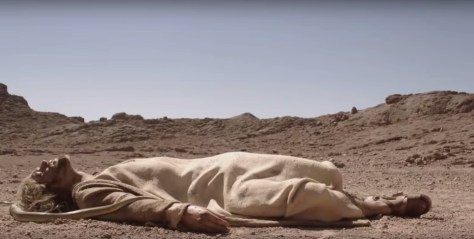
In Luke, the scope is much larger than the fulfillment of Jewish laws and prophesies, for Jesus was the Savior of the whole world. He did not just come for the insiders but, as in the Gospel of Mark, salvation came for the outsiders as well. In fact, Luke spends much of his book highlighting Jesus’ teachings on the poor, the widows, the orphans, the lepers and the social outcasts of society. In fact, Jesus’ first act (of which he near fatally upsets the Jewish crowd) is to preach a sermon on how God has often favored the Gentiles over his own people because, while the Jewish people know God and yet reject him, the Gentiles who are initially ignorant of God accept him with open hearts (Luke 4:18-30).

Right before that in Luke 3, Luke highlights Jesus’ baptism and then goes directly through his geneology in order to show how Jesus is not only a descendant of Abraham, as all Jews were, but that he was also a descendant of Adam. Luke, a student and colleague of the Apostle Paul’s, goes further than his teacher who felt it sufficient to show the promise of God to Abraham that his descendants will bless the nations (see Genesis 22:18).

Instead, Luke shows how Jesus was not just a descendant of Adam, but was a 2nd Adam. Unlike the 1st Adam who was duped by his own selfish desire to know more and be like God, Jesus selflessly stripped himself of his divine glory to be like a human and, in the process fulfilled God’s law. What’s more, while Adam chose mortal over eternal life, Jesus gave up his mortal life for eternal life.  Through the 1st Adam, we were given over to sin; however, through faith in the 2nd Adam, we are delivered from death in our sins to eternal life.

While the 1st Adam brought separation from God and eternal death to all of humanity, Jesus reunited us with God. He established a new Israel through his 12 disciples, and through them he began the process of ushering in a new Eden, which is heaven on Earth. This Kingdom will not just be for the prominent and wealthy. In fact, many who are wealthy will never find the kingdom of Heaven because they are so fixated on their worldly possessions; rather, this kingdom will be open to all who are humble and seek God over and above their worldly status.

This is why the poor are featured so prominently in Luke’s Gospel. Their poverty has already humbled them and they are receptive to God. Their hearts rejoice at the Gospel, which IS GOOD NEWS to them. The challenge for us is to allow our selves to be humbled enough by God to see that, due to our sins, we are impoverished and in need of God. We are no better or worse than anyone else in God’s eyes. God sees our sins and knows our hearts and only God, through Jesus Christ, can save us. Do you believe this? Search your heart and discover Christ who is waiting for you to let him in.

THOUGHT OF THE DAY
Jesus Christ alone is Lord of all Creation.

PRAYER
Lord, I humble myself before you. Purge my sins and cleanse my heart. Purify me and save me from myself and my sins. Amen.

God’s People, part 151: Temptation

Read Matthew 4:1-11

ALSO IN SCRIPTURE
“That’s why I take pleasure in my weaknesses, and in the insults, hardships, persecutions, and troubles that I suffer for Christ. For when I am weak, then I am strong.”  (2 Corinthians 12:10, NLT)

When we think of God’s people, we tend to think one of two things. We might think of the Israelites who were God’s “chosen people”, or we might think of specific characters in the Bible. Either way, we tend to idealize the people we are thinking about. For instance, we may think that God’s people are super faithful, holy, perform miracles and live wholly devout and righteous lives. Unfortunately, this idealism enables us to distance ourselves from being God’s people, because we feel that we fall short of those ideals. As such, I have decided to write a devotion series on specific characters in the Bible in order to show you how much these Biblical people are truly like us, and how much we are truly called to be God’s people.

image 1-24-19 at 8.09 pmPart 151: Temptation. As I begin to write this devotion on the temptation of Jesus in the wilderness, I must confess that I sit on the edge of the wilderness facing the unknown of what lies ahead when I cross over that border. On April 12, 2018, I published a podcast in which I discussed my personal struggle with my weight and healthy living. I have been very transparent about that, and at the time I had just started another juice fast because of my giving into the temptation of convenience foods. I have plenty of good excuses to do so, “I’m too busy”, “I’m too tired to cook”, “If I cook at this time I will be eating at 10 p.m.”, etc. Regardless, I know that I should eat whole foods and not succumb to those temptations, yet I do.

Well, by July of 2018 I had gotten back to a healthy weight. I was down to 203 lbs. Then I went on vacation and gave into the temptation to just “live a little”. Following vacation and the end of Summer things got hectic and stressful, nothing negative, but just a lot of things needing my attention all at the same time. As I gave into those same temptations again, my weight began to increase and my health, naturally, declined.

The truth be told, since July I have gained about 80 lbs. and, yes, it does bother me. I know people notice and probably talk about it when I am not present. Some people have even commented on it directly to me. I also know that a lot of that has to do with concern, but my self-consciousness kicks in all the more as a result. So here I am, writing once again about my struggles, as I sit here the night before I start another juice fast to kick-start me back into healthy living.

Like any fast, it is a wilderness period where I will come face-to-face with my demons and will be tempted over and over again to just give up. When Jesus went into the wilderness he fasted too. During that time, Satan came to him and tempted him to eat and, overall, to just give up what he was doing. In a roundabout way, the devil was telling Jesus to just give up and make life easier on himself. Yet, Jesus rebuked Satan and continued through the wilderness.

That time of intense struggle prepared Jesus for doing ministry in the world. As tough as the wilderness experience was, it was nothing compared to what he was going to face out in the world. Jesus knew that would be the case and kept his focus on God and God’s promises as found in Scripture.

So often we try to avoid the wilderness, to skip over it entirely; however, what we fail to realize is that it is in the wilderness where we not only come face-to-face with our demons, but we also come face-to-face with our GOD. It is in the wilderness where we are humbled and profoundly learn about our weaknesses; however, it is also in that time that we learn how God’s strength shines brightly through them.

Today I am challenging you, even as I challenge myself, to enter into the wilderness. For each of us that place is different, but it is a place that exists for us all. Enter into it and face the things you need to face so that Christ can attend to you with angels and strengthen you for carrying out his mission in the world. Sure, it will be a painful experience, but as the old adage goes, “No pain, no gain.”

THOUGHT OF THE DAY
“My grace is all you need. My power works best in weakness.” – Jesus Christ (2 Corinthians 12:9, NLT)

PRAYER
Lord, lead me into the wilderness and help me to face my weaknesses so that, in them, I may be strengthened through your sanctifying grace. Amen.

God’s People, part 145: Simeon

Read Luke 2:25-35

ALSO IN SCRIPTURE
“Then, after doing all those things, I will pour out my Spirit upon all people. Your sons and daughters will prophesy. Your old men will dream dreams, and your young men will see visions.”  (Joel 2:28, NLT)

When we think of God’s people, we tend to think one of two things. We might think of the Israelites who were God’s “chosen people”, or we might think of specific characters in the Bible. Either way, we tend to idealize the people we are thinking about. For instance, we may think that God’s people are super faithful, holy, perform miracles and live wholly devout and righteous lives. Unfortunately, this idealism enables us to distance ourselves from being God’s people, because we feel that we fall short of those ideals. As such, I have decided to write a devotion series on specific characters in the Bible in order to show you how much these Biblical people are truly like us, and how much we are truly called to be God’s people.

SimeonPart 145: Simeon. In the Gospel of Luke we get a little more of Jesus’ back story than we do in the other three Gospels. In Luke and John, we really get no back story at all. In Matthew, we learn that Jesus and his family flee to Egypt to avoid being slaughtered by Herod. After some time, no one really knows how long, Jesus’ family take him back to Israel and settle in the town of Nazareth, which a backwater town that was inconspicuous and far enough away from King Herod’s sons reach.

In Luke, however, Joseph and Mary were originally from Nazareth, traveled to Bethlehem to participate in Caesar Augustus’ census, and gave birth to Jesus in a stable. Eight days later, as per Jewish Law, Jospeh and Mary brought their son to the Temple to be circumcised. Following that they return to Nazareth and raise their son there. From there we are told that Jesus’ family went to the temple annually to partake in Passover and, when Jesus’ was twelve years old, he gives his parents a heart attack when he decides to stay behind as they were traveling home in order to school the religious leaders in the Temple.

But that is getting ahead a bit. After Jesus was circumcised, his parents and him ran into an old man named Simeon. Like most observant and devout Jews, Simeon had spent his life wondering when the God would deliver God’s people from the oppression of foreign occupation. In fact, Simeon not only wondered but, at least as an old man, was lying in lament and wait for this event to happen.

We are told that Simeon was a righteous man, meaning that he lived in right relationship with God and with neighbor and that he was a just man. The Holy Spirit was upon him and revealed to him that he would see the Lord’s Messiah before he died. We are also told that on the day Jesus was circumcised, the Holy Spirit led him to the Temple.

Friends, this is an amazing account because it shows the powerful workings of the Holy Spirit. God’s guidance is given to those who seek God out and open themselves up to what God is doing. That is exactly what happened here to Simeon. As such, not only did Simeon get to see the Christ, but he also was the beginning of the fulfillment of what was prophesied in Joel: “I will pour out my Spirit upon all people. Your sons and daughters will prophesy. Your old men will dream dreams, and your young men will see visions.” Joel was not yet fulfilled, that would happen later at Pentecost, but this was a sign of what was to come.

Upon seeing Jesus, Simeon took him into his arms and blessed him and praised God for fulfilling God’s promise to him. He then, again a sign of what was to be fulfilled on Pentecost, prophesied: “This child is destined to cause many in Israel to fall, and many others to rise. He has been sent as a sign from God, but many will oppose him. As a result, the deepest thoughts of many hearts will be revealed. And a sword will pierce your very soul.” (Luke 2:34-35, NLT)

Sisters and brothers, the Holy Spirit IS REAL and works through those who seek out the LORD. The challenge for us is to open ourselves, as Simeon did, to the presence and the working of the Holy Spirit. The time for complacency is over. Christ came, Christ lived, Christ died, Christ rose again and ascended into heaven, and Christ will come again in final glory. We are here in advent of that coming and there is much more work to be done to prepare the way of the coming Lord. Let us be the ones who do not oppose him, but proclaim the Christ’s holy name. Amen.

THOUGHT OF THE DAY
“Yea, amen! let all adore thee, high on thine eternal throne; Savior, take the power and glory, claim the kingdom as thine own: O come quickly! O come quickly! O come quickly! Thou shalt reign, and thou alone.” – Rev. Charles Wesley

PRAYER
Lord, spark your passionate fire within my soul and use me to prepare Your way in this broken world. Amen.

God’s People, part 82: The Bronze Snake

Read Numbers 21:4-9

ALSO IN SCRIPTURE

“He removed the pagan shrines, smashed the sacred pillars, and cut down the Asherah poles. He broke up the bronze serpent that Moses had made, because the people of Israel had been offering sacrifices to it. The bronze serpent was called Nehushtan.” (2 Kings‬ ‭18:4‬ ‭NLT‬‬)‬‬

When we think of God’s people, we tend to think one of two things. We might think of the Israelites who were God’s “chosen people”, or we might think of specific characters in the Bible. Either way, we tend to idealize the people we are thinking about. For instance, we may think that God’s people are super faithful, holy, perform miracles and live wholly devout and righteous lives. Unfortunately, this idealism enables us to distance ourselves from being God’s people, because we feel that we fall short of those ideals. As such, I have decided to write a devotion series on specific characters in the Bible in order to show you how much these Biblical people are truly like us, and how much we are truly called to be God’s people.

img_1005Part 82: The Bronze Snake. For today’s devotion, I want us to travel back in time for a moment. Before we do, I would like to remind you that that King Hezekiah was a godly king who lived in the ways of the Lord and brought the people of Judah back into a right relationship with God. One of the things that he did was destroyed all of the foreign shrines and idols and enforced that all worship be done in the Temple of the LORD in Jerusalem.

One of the idols that he destroyed was named Nehushtan. That, according to 2 Kings, was the bronze serpent mounted staff that Moses made hundreds of years earlier. It is written that Hezekiah destroyed this relic “because the people of Israel had been offering sacrifices to it.”

Now let us time travel back to the time of Moses. If you recall, Moses had led the people out of Egypt and they had been wandering around the wilderness for 40 years. The reason it took them so long to cross what was relatively a short distance was because they were constantly griping, complaining, and disobeying God. The greatest of those instances came when they abandoned God and demanded that Aaron build a golden calf for them to worship.

According to Numbers 21:4-9, the people were in such crazed fit, angry at God and at Moses for leading them out of Egypt. Now imagine this, they had been miraculously liberated from slavery in Egypt; yet, there they were complaining that God and Moses had led them to where they were. Were they hungry? No. Were they thirsty? No. They had been provided for by God from the beginning.

So, you might ask, why were they angry? Well, they were pulling what kids often pull on their parents. “Dad, we have nothing to eat, nothing to drink in this house.” Of course, if you open up the refrigerator you will see plenty of food and drink; however, what is really being said is, “we don’t have what we would like to eat, we are tired of eating this stuff.” That is exactly what the Hebrews were doing. They were griping against eating the manna that God was sending them, calling it “nothing.” How ungrateful.

So, angry, God sent out poisonous snakes to bite them. Okay, this seems like an outlandish response, but suspend disbelief and bear with it for a moment more. Moses, naturally horrified, prayed to God and repented for the people. He stated, “We have sinned by speaking against the Lord and against you. Pray that the Lord will take away the snakes” (Numbers‬ ‭21:7‬ ‭NLT‬‬). So, God instructed Moses to create a bronze snake and put it on staff. God then instructed the people to look at the snake. Once the people did, they were instantly healed from the snake bites. God’s point was made.‬‬

Unfortunately, what was once holy and healing became perverted into an idol that people worshiped. What was once a reminder of God’s sovereignty and God’s holy presence, became a god unto itself. People forgot that the healing source of the bronze snake was God, and instead worshiped the snake as if it had the power to heal. So, for this reason, Hezekiah destroyed the idol and redirected people to the Temple, where the one, the true, the imageless God was to be worshiped!

What has God done to bring healing and wholeness into your life? How have you taken such things and made idols of them? How have you forgotten what God has done for you? How have you forgotten the sovereignty of God? How have you forgotten our gracious, holy God and how have you turned your eyes away toward other, less-than-holy things? Today is the day for honesty. What has become your bronze snake? What has become your idol. Today’s challenge is to assess what those things are and to eradicate them, as Hezekiah eradicated the bronze snake, from your life.

THOUGHT OF THE DAY

“Man’s mind is like a store of idolatry and superstition; so much so that if a man believes his own mind it is certain that he will forsake God and forge some idol in his own brain.” — John Calvin

PRAYER

Lord, purge me of my idols and set my heart and eyes back toward you. Amen.

A LOOK BACK: Ekklesia

devotions-Bible-Coffee
Photo by Kim Stiver from Pexels

Writing the Life-Giving Water devotionals is not only an important ministry, but is a deeply rewarding spiritual discipline for me as well. With that said, observing Sabbath (aka rest) is an important spiritual discipline as well. So here is A LOOK BACK to a devotion I wrote in the past. Read it, reflect on it, be challenged by it. Who knows how God will speak to you through it and how it will bear relevance in your life today? May the Holy Spirit guide you as you read the suggested Scripture and subsequent devotion.

God’s People, part 66: Total War

Read 2 Chronicles 13:1

ALSO IN SCRIPTURE
“God blesses those who work for peace, for they will be called the children of God.” (Matthew 5:9 NLT)

When we think of God’s people, we tend to think one of two things. We might think of the Israelites who were God’s “chosen people”, or we might think of specific characters in the Bible. Either way, we tend to idealize the people we are thinking about. For instance, we may think that God’s people are super faithful, holy, perform miracles and live wholly devout and righteous lives. Unfortunately, this idealism enables us to distance ourselves from being God’s people, because we feel that we fall short of those ideals. As such, I have decided to write a devotion series on specific characters in the Bible in order to show you how much these Biblical people are truly like us, and how much we are truly called to be God’s people.

totalwarPart 66: Total War. One of my favorite games ever was a game called Medieval: Total War, which was a turn-based, strategy and real-time tactics computer game developed by Creative Assembly and distributed by Activision. Released in North America on August 19, 2002, I was fully immersed in that game for years until it no longer ran on the newer Windows platforms. I loved it because I love the Medieval period and the game, for me, was like time traveling back to that period with all its historical glory.

The premise of the game is this: following picking which “faction” one is going to be (e.g. Bittania, Spain, France, Holy Roman Empire, etc.), one works to build up one’s fortresses, troops, and kingdom/empire. One can set taxes and things like that; however, it is also important to keep one’s people happy, otherwise, revolts can and will outbreak. As one plays the game, time passes and historical events (e.g. the plague epidemic, the emergence of the Golden Horde, etc.) take place at in the correct chronological and historical order.

What this all amounts to is, as the title suggests, total war! One must grow their armies, protect their kingdoms and expand their empires through warring with other kingdoms and empires around them. When portions of one’s empire revolt and split off, vendettas occur and one builds up enough troops to go in and conquer the land back! This sort of thing is exactly what happened to Judah when Israel split off from them. Judah kept trying to reclaim Israel through total and constant war.

Thus, we begin to get the picture of how the sin of David with Bathsheba really spun out of control generations later. Had David not seduced and raped Bathsheba, had he not murdered Uriah the Hittite, had he not had Solomon as a son, he would not have been able to put Solomon as his heir. That is important because it was the act of putting Solomon as his heir that caused division in David’s family, that caused Solomon to kill off all of his political opponents, and caused enemies of Solomon to rally and have their day of independence following the death of the king. David’s one selfish act of sexual assault caused his entire Kingdom to divide and fall into a perpetual state of total war.

Perhaps it is too simple to state that it was just one of David’s sins; however, the fact of the matter is that David’s success became David’s failure and, had he followed the LORD instead of his own impulses, things might have been different. Even if others following him became corrupt, it would not have been a result of his own actions. Instead of being united in peace under God, the Kingdoms of Israel and Judah became separate, warring, enemies looking to shed each other’s blood any chance they could to dominate, subdue and lord their power over the other.

We can see this in our own nations and kingdoms today. Different time, same old story. The question for us becomes this: are we going to be a people who follow our leaders into a divide and conquer mentality, or are we going to follow the Lord, our Savior Jesus Christ, in being peacemakers in hostile territories? On our own, we will inevitably pick the former option for that is the result of our sinful, human nature; however, if we open our hearts to Jesus and allow the Holy Spirit to work within us, then all things (including peacemaking) are possible. Let us choose Christ, who is the Prince of Peace, the Lord of lords, and the King of kings.

THOUGHT OF THE DAY
“Wars are poor chisels for carving out peaceful tomorrows. – Rev. Dr. Martin Luther King, Jr.

PRAYER
Lord, help me to be a peacemaker among warmongers, so that I may shine the truth of your light into the darkness. Amen.

A LOOK BACK: I WILL BE

bflw-devotional-800x490Writing the Life-Giving Water devotionals is not only an important ministry, but is a deeply rewarding spiritual discipline for me as well. With that said, observing Sabbath (aka rest) is an important spiritual discipline as well. So here is a LOOK BACK to a devotion I wrote in the past. Read it, reflect on it, be challenged by it. Who knows how God will speak to you through it and how it will bear relevance in your life today? May the Holy Spirit guide you as you read the suggested Scripture and subsequent devotion.